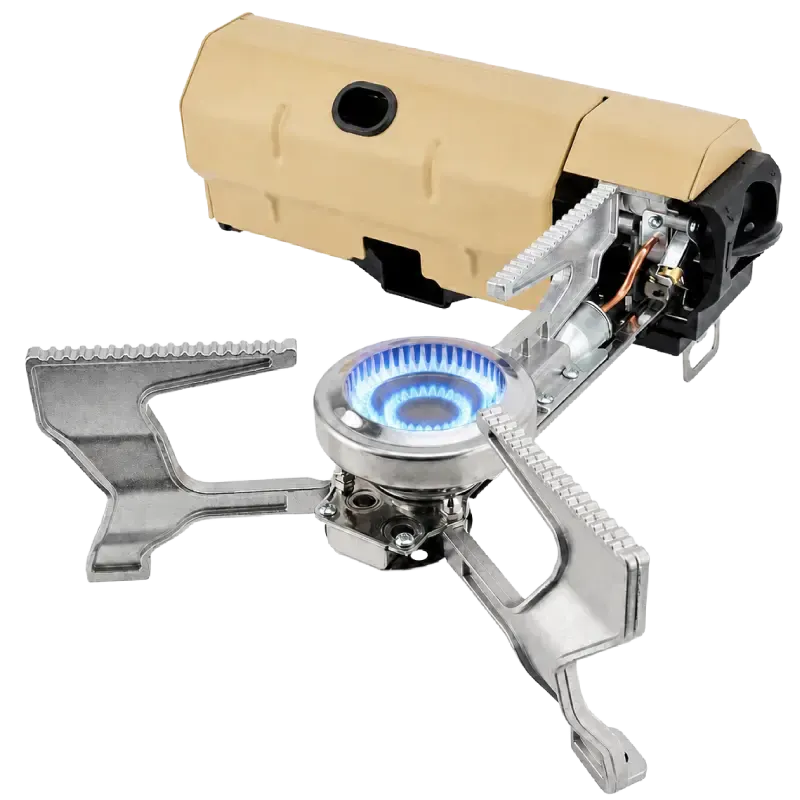
The quick answer
For most campers, the best portable stove is the one you will actually bring every time: compact enough to live in the car, powerful enough to boil water fast, and easy to control for simmering. Check eight things — power, flame control, ignition, stability, safety features, packed size, fuel and total value — and you will avoid the most common buying mistakes.
Shopping for a camping stove can feel strangely complicated. There are tiny backpacking burners, big two-burner boxes, wood stoves, liquid-fuel stoves and folding gas stoves, all promising to be the one you need. The good news: once you know what actually matters at the campsite, the choice gets much simpler. Here is the checklist we use.
Not sure which format you need in the first place? Our side-by-side guide to the types of camping stoves compares propane, butane, canister, liquid-fuel, wood and folding gas stoves.
Step 1: be honest about how you camp
Before you compare specs, picture your next three trips. That tells you more than any spec sheet:
- Car camping and road trips — you can carry a little more, so prioritize power, stability and easy cooking.
- Fishing, day hikes and picnics — packed size matters most. If it doesn’t fit in the tackle bag or daypack, it stays home.
- Backyard, tailgating and emergencies — quick setup and a stable base for full-size pans win (see our tailgate cooking guide).
- Ultralight backpacking — every ounce counts, and a dedicated minimalist burner may suit you best.
The 8-point checklist
- Power (heat output)Higher output means faster boils and a skillet that actually sears. It matters most on cold mornings, in wind and when cooking for several people (confused by watts vs. BTU? see camp stove specs explained).
- Flame controlPower is only half the story. A good stove turns down to a gentle simmer for pancakes, sauces and eggs without blowing out.
- IgnitionPush-button electronic ignition means no hunting for a lighter in the wind, and no lighter flame near the burner.
- StabilityWide, locking pan supports and a solid base keep a full pot of boiling water from tipping — the most common camp-kitchen accident.
- Built-in safetyLook for protection against overpressure, an auto-lock and supports that click firmly into place.
- Packed size and carry caseA stove that folds into its own case and pouch rides along everywhere, so you cook outside more often.
- FuelCheck which cartridge or fuel the stove takes and how easy it is to buy where you live. Always follow the manual for the exact type.
- Total valueCompare the full price, shipping, warranty and the money-back guarantee, not just the sticker price. Tempted by a budget model? See cheap camping stove vs. folding gas stove.
Quick comparison of stove types
| Stove type | Best for | Trade-off |
|---|---|---|
| Folding gas stove | Car camping, fishing, picnics, emergency kit | Uses gas cartridges |
| Classic 2-burner box | Large groups at one campsite | Bulky and heavy |
| Ultralight backpacking burner | Long hikes | Small pot supports, less stable |
| Wood-burning stove | No fuel to carry | Slow, smoky, often banned in dry seasons |
| Liquid-fuel stove | Extreme cold, expeditions | Priming and more maintenance |
For most people who camp a few times a year and want hot food on day trips too, a folding gas stove is the sweet spot. It is the same reasoning we walk through in our camp stove vs. campfire comparison.
Five mistakes to avoid
- Buying the biggest stove — a bulky stove that stays in the garage cooks nothing.
- Ignoring flame control — all-or-nothing heat burns breakfast.
- Forgetting stability — skinny supports and a full pot are a bad mix.
- Skipping the safety basics — any gas stove is for outdoor use only. Read our portable gas stove safety tips before your first trip.
- Not checking the guarantee — a clear return window takes the risk out of trying a new stove.
Questions to ask before you buy
Run through these five questions in the store or on the product page. If a stove gets a clear yes on most of them, it is probably a good fit:
- Will it fit in the bag I already carry?If the answer is no, be honest: it will probably only come out once or twice a year.
- Can I light it with one hand, in the wind?Push-button ignition makes cold, breezy mornings much less frustrating.
- Does it hold my favorite skillet without wobbling?Pan supports should feel solid and lock firmly, even with a heavy pot of water.
- Can it simmer as well as it boils?A flame you can turn down gently is what separates real cooking from just heating water.
- What happens if it is not right for me?Look for free shipping and a clear money-back guarantee, so trying it costs you nothing but a little time.
A stove that passes all five is one you will reach for on fishing mornings, backyard cookouts and road trips — not just the big camping weekend. Bought your first one? Our camp stove guide for beginners walks you through the first cook step by step. Buying one for someone else this holiday season? See is a camping stove a good gift.
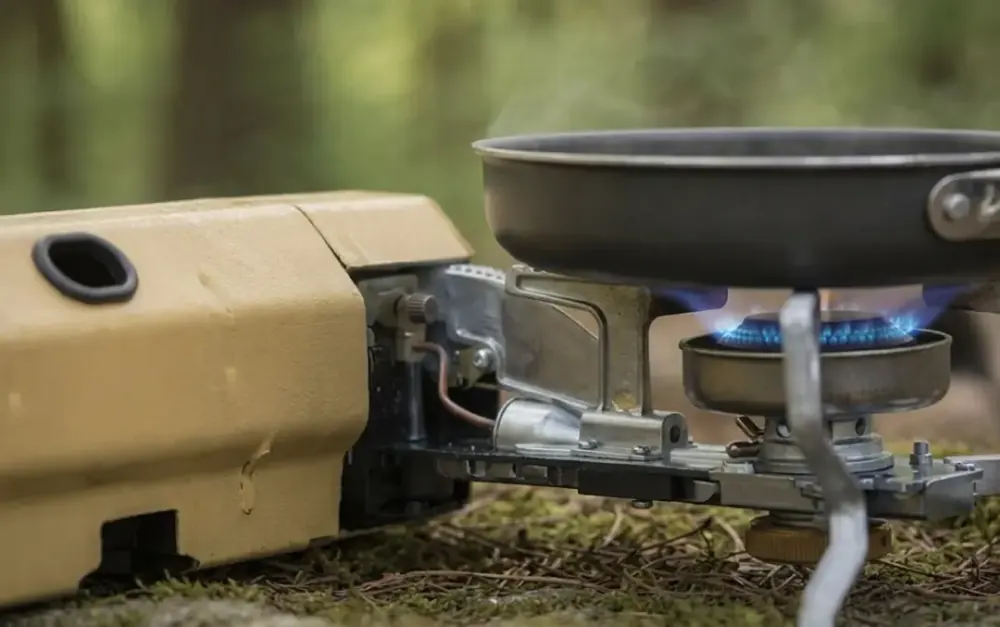
Our recommendation: Qinux GoFlamex
If you want one stove that passes all five questions above and comes along on every kind of trip, the Qinux GoFlamex is the one we recommend. We put it through this same checklist, and it scores well on the points that matter most for everyday campers:
- Power: up to 2600W with a focused blue flame right under the pan.
- Control: a precise flame-control knob, from a gentle simmer to a fast boil.
- Ignition: push-button electronic ignition.
- Stability: reinforced supports and a stable base for full-size pans.
- Safety: smart valves designed to protect against unexpected overpressure, plus an auto-lock.
- Packed size: it folds completely into its own case and slips into a protective carry pouch.
- Value: free shipping and a 14-day money-back guarantee on the official site.
Owners rate it 4.8/5 on the official site. Patricia’s first impression: “The water boils much faster than I expected.” For the exact fuel, simply follow the manual that comes with the stove. The launch offer is $119 for one stove (half the regular $238), down to $86 per unit on the 5-pack, with free shipping and a 14-day money-back guarantee.
For the full story, read our GoFlamex review or see the overview on our home page.
Frequently asked questions
What is the best type of camping stove for beginners?
A compact gas stove with push-button ignition and an easy flame-control knob is the simplest place to start. It lights in seconds, needs no priming or fire-building, and lets you go from a gentle simmer to a fast boil with one turn.
How many watts should a camping stove have?
More power means water boils faster and a skillet heats up quicker, which matters in cold or windy weather and when cooking for a group. Power only helps if you can also turn it down, so look for strong output together with precise flame control. The Qinux GoFlamex is rated up to 2600W.
Is a single-burner stove enough for camping?
For one to four people, yes. Most camp meals are one-pan or one-pot dishes, and a powerful single burner handles them easily. If you cook for a big group, two compact stoves are often more flexible than one bulky two-burner unit.
What safety features should a portable gas stove have?
Look for a stable base with locking supports, electronic ignition, and built-in protection such as valves that guard against overpressure or an auto-lock. And whatever stove you buy, use it outdoors only, never in a tent, car, garage or house.
Which fuel does my camping stove need?
It depends on the model. Common options are butane, propane, isobutane blends, liquid fuel and wood. Always use exactly the cartridge type listed in your stove’s manual and never try to adapt a different one.