The quick answer
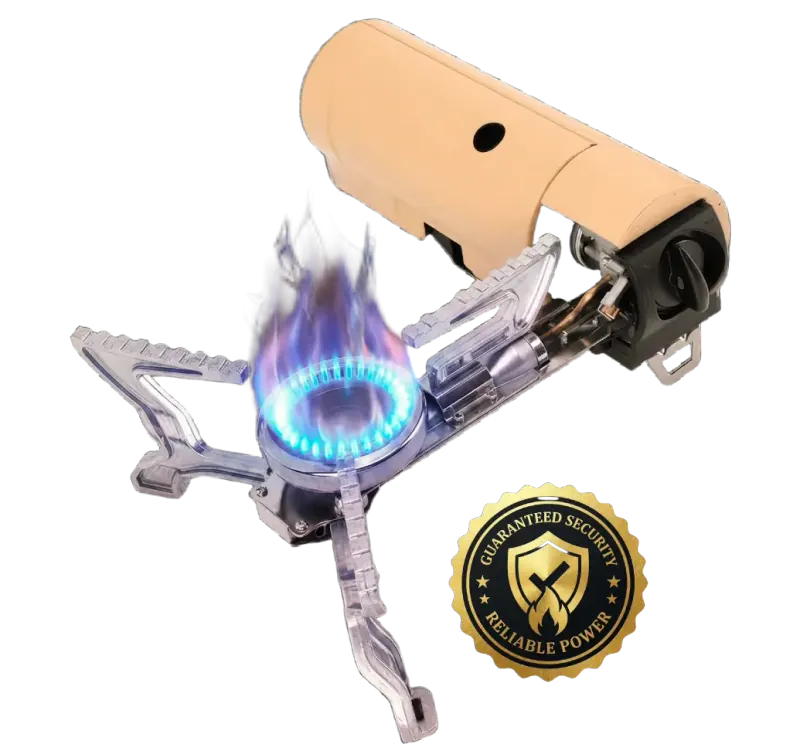
Watts and BTU measure the same thing, heat output, in different units: multiply watts by about 3.412 to get BTU per hour, so a 2600W stove is roughly 8,870 BTU/hr. Beyond power, the specs that matter most in real life are flame control (can it simmer?), ignition, stability and built-in safety. The Qinux GoFlamex checks each of those boxes in a stove that folds into its own case.
Shopping for a camp stove means reading a product page full of numbers and buzzwords: 2600W, 10,000 BTU, piezo, blue flame, overpressure valve, auto-lock. Some of them tell you a lot about how the stove will cook; others sound impressive but matter less than you think. This guide walks through each term in plain language, what it means at the campsite, and what to look for, so you can read any spec sheet with confidence. (If you want the bigger buying picture, our 8-point guide to choosing a camping stove covers it.)
Power: watts vs. BTU
Every stove lists its heat output, but American brands usually use BTU (British thermal units per hour) while many international brands use watts. They are the same measurement in different units, and converting is simple:
- Watts × 3.412 = BTU per hour. 2600W ≈ 8,870 BTU/hr.
- BTU per hour ÷ 3.412 = watts. 10,000 BTU/hr ≈ 2,930W.
What it means in practice: higher output heats a pan faster and handles bigger pots, which is what you want for boiling pasta water or frying breakfast for four. It also burns fuel faster at full power. So the number is a ceiling, not a setting you use all the time; most cooking happens well below it.
What to look for: enough output for the cookware you actually use. For one or two people with a small pot, a modest rating is fine; for a group, a full skillet or cold-weather trips, more power makes a real difference. The GoFlamex is rated at up to 2600W, which puts serious heat under a pan for quick boils and proper searing.
Flame color: why “blue flame” is on the box
A clean, steady blue flame is the sign of efficient combustion: the gas is mixing well with air and burning hot. A lazy yellow or orange flame usually means poor mixing, a dirty burner or fuel problems, and it tends to leave soot on your pans. When a maker highlights a focused blue flame, it is telling you the burner is designed to concentrate heat where the pan is. If yours ever turns yellow, our guide to a camp stove that won’t light or has a weak flame covers the usual causes.
Ignition: piezo, electronic, or matches
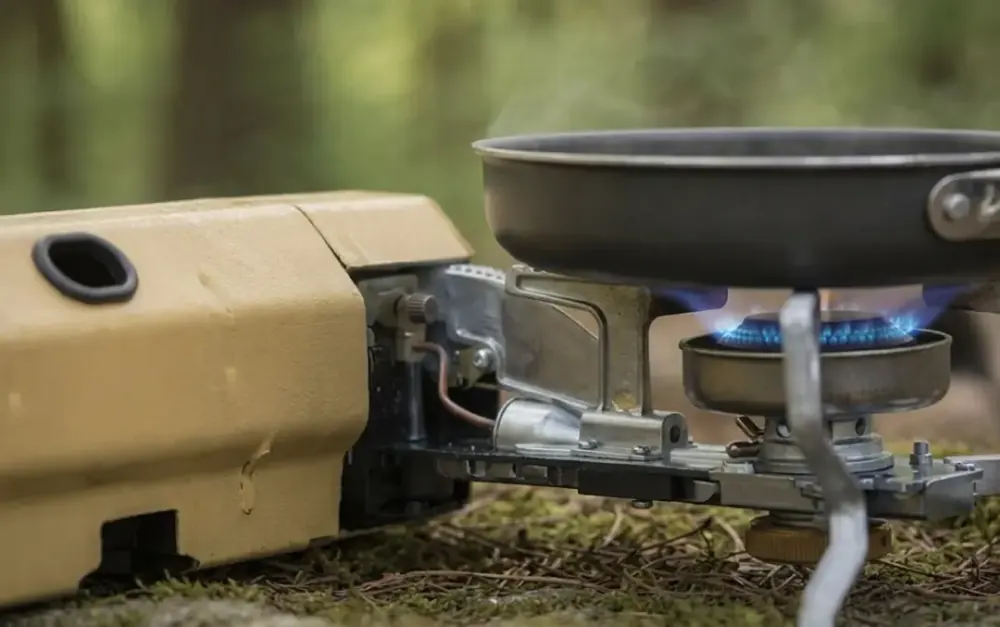
You will see three options. Manual means you light it with a match or lighter. Piezo and electronic ignition both create a spark at the burner when you press a button or turn the knob. What it means in practice: push-button ignition is faster, keeps your hand away from the gas, and saves you from hunting for a lighter in the wind or with cold, wet fingers. It is one of the most underrated specs on the list. GoFlamex uses a built-in electronic ignition.
Flame control: the spec nobody prints as a number
Product pages love to list maximum power, but they rarely tell you how low a stove can go. That is a shame, because a good simmer is what separates a stove that only boils water from one that cooks real food: eggs, rice, sauces, pancakes. Look for wording like “precise” or “adjustable” flame control, and read owner reviews for comments about simmering. GoFlamex lists precise flame control, from a gentle simmer to a rolling boil.
Stability: supports, base and pot size
Terms like reinforced supports, wide base or pot stand describe how well the stove holds cookware. What it means in practice: a stable stove does not wobble when you stir, does not tip with a full pot of water and copes with an uneven picnic table. If a maker lists a maximum pot diameter, use it; if not, test your favorite pan at home first. GoFlamex highlights reinforced supports for a stable base.
Safety terms: valves, auto-lock and certifications
| Term on the box | What it means | Why it matters |
|---|---|---|
| Overpressure / safety valve | A valve designed to react if pressure in the fuel system rises unexpectedly | An extra layer of protection, especially on hot days |
| Auto-lock | A locking mechanism for the fuel connection or controls | Helps keep things secure while you cook |
| Flame-out / shut-off protection | Cuts gas flow if the flame goes out (on stoves that include it) | Reduces the risk of unburned gas |
| Certification marks | Testing to a recognized safety standard, where listed | Independent confirmation of the design |
GoFlamex integrates smart valves that, according to the maker, automatically protect against anomalies or unexpected overpressure, plus an auto-lock. Whatever stove you use, the basics never change: cook outdoors or in a well-ventilated area, never inside a tent or car, and never leave a lit flame unattended. Our portable gas stove safety guide covers the rest.
Fuel type: read the manual, not the box
Portable gas stoves run on different fuels and connectors, and the right one is whatever the manufacturer specifies. Some product pages list it prominently; others, including GoFlamex’s, leave the details to the manual. What to do: before buying fuel, check the manual or the official support, and only use the type it names. This is not a spec to guess.
Boil time, packed size and weight
- Boil time (“boils 1 liter in X minutes”) is usually measured in calm, ideal conditions. Wind, altitude, cold fuel and no lid can easily stretch it. Use it to compare stoves, not to plan dinner to the second.
- Packed size tells you whether the stove fits in the bag you already carry. A stove that folds into its own case, like GoFlamex, protects the burner and keeps the kit tidy.
- Weight matters most for backpacking; for car camping, tailgates and road trips, stability and power usually matter more. GoFlamex does not publish a weight, so if grams are critical for you, check with the official site.
Cheat sheet: which specs matter for how you cook
| How you use it | Specs to prioritize |
|---|---|
| Car camping, picnics, tailgates | Power, flame control, stable supports, easy ignition |
| Cooking for a group | Power and stability for big pots and skillets |
| Cold or windy trips | Power, push-button ignition, a focused flame |
| Power outages at home (used outdoors) | Built-in safety, easy ignition, simple storage |
| Ultralight backpacking | Weight and packed size first, then fuel efficiency |
Our recommendation: Qinux GoFlamex
Read the spec sheet the way we just did, and the Qinux GoFlamex lines up on the things that make cooking outdoors easy: real power, real control, a spark at the push of a button and safety built in. It is the portable stove we recommend for campers, road-trippers, tailgaters and anyone who wants a dependable burner in the car or the emergency kit.
- Up to 2600W (about 8,870 BTU/hr) — fast boils and proper searing, even for a group.
- Focused blue flame — heat concentrated right under the pan.
- Electronic ignition — lights with one press, no matches or lighter.
- Precise flame control — from a gentle simmer for eggs and sauces to a rolling boil.
- Reinforced supports — a stable base for pots and skillets.
- Smart valves and auto-lock — built-in protection against unexpected overpressure, according to the maker.
- Folds into its own case — with a protective carry bag for the car, backpack or RV.
Owners rate it 4.8/5 on the official site from more than 1,300 reviews, and 94% would recommend it. Right now it costs $119 for one stove (half the regular $238), dropping to $86 per unit on the 5-pack, with free shipping and a 14-day money-back guarantee. It is sold only on the official website.
Want the full picture first? Read our complete GoFlamex review or see the quick overview on our home page. As with any gas stove, follow the manual and use the fuel it specifies, use it outdoors only and keep kids and pets away from the flame.
Frequently asked questions
How do I convert watts to BTU on a camp stove?
Multiply the watts by about 3.412 to get BTU per hour. A 2600W stove is roughly 8,870 BTU/hr. To go the other way, divide BTU/hr by 3.412. Both numbers describe the same thing: how much heat the burner puts out per hour at full power.
Is a higher BTU or wattage always better?
Not always. More output means faster boiling and searing, but it also means more fuel used at full blast. What matters just as much is whether the stove can turn down to a gentle simmer and how well the flame holds up in wind. Pick enough power for your cookware and group, then look at control.
How many watts does a camp stove need to boil water quickly?
Single-burner portable stoves commonly list somewhere in the low thousands of watts, and anything in that range boils a pot of water for coffee or pasta in a few minutes in calm conditions. The GoFlamex is rated at up to 2600W. Real boil times depend on wind, altitude, pot size, lid and starting water temperature.
What does electronic ignition mean on a stove?
It means the stove lights itself with a spark when you press a button or turn the knob, so you do not need matches or a lighter. It is faster, keeps your hand away from the burner and works with cold or wet hands.
Why does the spec sheet not list the fuel type?
Some makers leave fuel details to the manual. If the listing does not say, always check the manual or the official support before buying fuel. Using the fuel the manufacturer specifies is essential for safe operation; the GoFlamex FAQ also points owners to the manual for this.