The quick answer
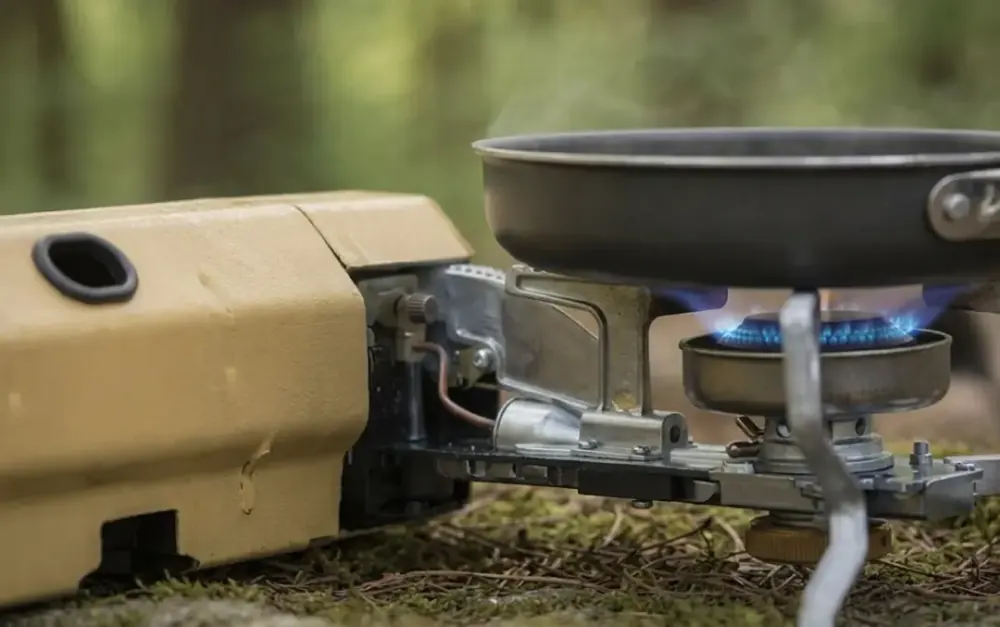
Unless the manufacturer clearly rates it for indoor use, a portable gas stove should be used outdoors only. That includes the garage, the tent, the camper and the kitchen with the window cracked. The reason is carbon monoxide: a colorless, odorless gas produced whenever fuel burns, and most dangerous in small, closed spaces. The good news is that “outdoors” can be three steps from your door: a balcony, porch, patio or driveway. A fast-folding stove like the Qinux GoFlamex makes that the easy option, which is why it is our pick for camping, tailgates and the next power outage alike.
The power has been out for two hours, dinner is nowhere, and there is a perfectly good camping stove in the closet. Can you just set it up on the kitchen counter? It is one of the most common questions people ask about portable gas stoves, and it comes up every winter storm season. Here is the honest answer, why it is the answer, and the practical plan for cooking hot food safely when the stove in your kitchen is not an option.
What the manual says, and why it says it
Pick up almost any portable camping stove and the label says the same thing: for outdoor use only, with a list of places that count as indoors: homes, garages, tents, campers, vans, boats. Some stoves sold specifically as indoor-rated butane burners exist, and even those come with instructions about ventilation and a working carbon monoxide alarm. The Qinux GoFlamex is designed as an outdoor stove, and that is how we recommend using it.
The reason is not that the stove is fragile or likely to explode. It is chemistry. When gas burns, it uses up oxygen and releases carbon monoxide (CO). Outdoors, the CO drifts away harmlessly. Indoors, it builds up. And because CO has no color, no smell and no taste, your body does not warn you until symptoms start: a headache, dizziness, nausea, confusion. In a small closed space, that can happen faster than most people expect.
Why “just crack a window” is not enough
- Low flames make more CO, not less. A stove on simmer burns less cleanly than one on high, so the gentle setting people use indoors is the one that produces more carbon monoxide.
- A pot close to the burner makes it worse. A cold pan right above the flame cools the combustion and increases CO output.
- Long cooking sessions add up. Boiling water for coffee is one thing; simmering a stew for an hour fills a room.
- A window gap is not airflow. Without a cross-draft, air in the room barely moves. A cracked window makes you feel safer without actually clearing the gas.
- Garages and tents are the worst case. They are small, they seal well, and people stay in them. Manuals list them by name for a reason.
None of this makes a portable stove dangerous. It makes it an outdoor tool, exactly like a charcoal grill or a generator. Used where it belongs, it is one of the most useful things you can own.
Where you CAN cook: your outdoor options, ranked
| Spot | Is it OK? | What to watch |
|---|---|---|
| Patio, deck or driveway | Yes, the best option | Flat, stable surface; keep away from siding, fences and dry leaves |
| Balcony open on one side | Yes | Away from railings and anything hanging; check your building’s rules on open flames |
| Covered porch, open to the air | Yes | Keep the flame well below any ceiling or awning |
| Garage with the door open | No | Still an enclosed space; step out onto the driveway instead |
| Kitchen with window cracked | No | CO builds up; no cross-draft to clear it |
| Tent, camper, van or car | Never | Small sealed spaces; the most dangerous of all |
Power outage plan: hot food in the first hour
- Move the operation outsidePick the spot from the table above. A small folding table on the porch or driveway is your outage kitchen.
- Set the stove on a flat, non-flammable surfaceNot on a plastic table or a wooden deck rail. A metal tray or a paving slab works well.
- Light it and cook simpleBoil water first (coffee, tea, instant noodles, warming canned soup), then one-pan meals. Our easy camping meals for a portable stove all work on a porch.
- Keep kids and pets backDraw an invisible line a couple of steps around the stove.
- Turn off the gas before you carry anything inBring the hot pan inside, not the lit stove. Let the stove cool completely before you fold it.
- Store the fuel outside the living spaceFuel canisters belong in a cool, ventilated place, never near a heat source.
Not sure your home is ready? Take our 7-question power outage cooking quiz and fix the gaps before the next storm.
What NOT to do, even for five minutes
- Do not use the stove as a room heater. This is how most indoor CO incidents start.
- Do not run it in a bathroom or closet with the door shut to “keep the smell out”.
- Do not leave a lit stove unattended, inside or out.
- Do not move a lit stove. Turn it off, let it cool, then move it.
- Do not ignore a CO alarm. If it sounds, get everyone outside first and ask questions later.
If the stove itself is misbehaving outdoors, sputtering or burning yellow, see our troubleshooting guide: camp stove won’t light or flame is weak.
Our recommendation: Qinux GoFlamex
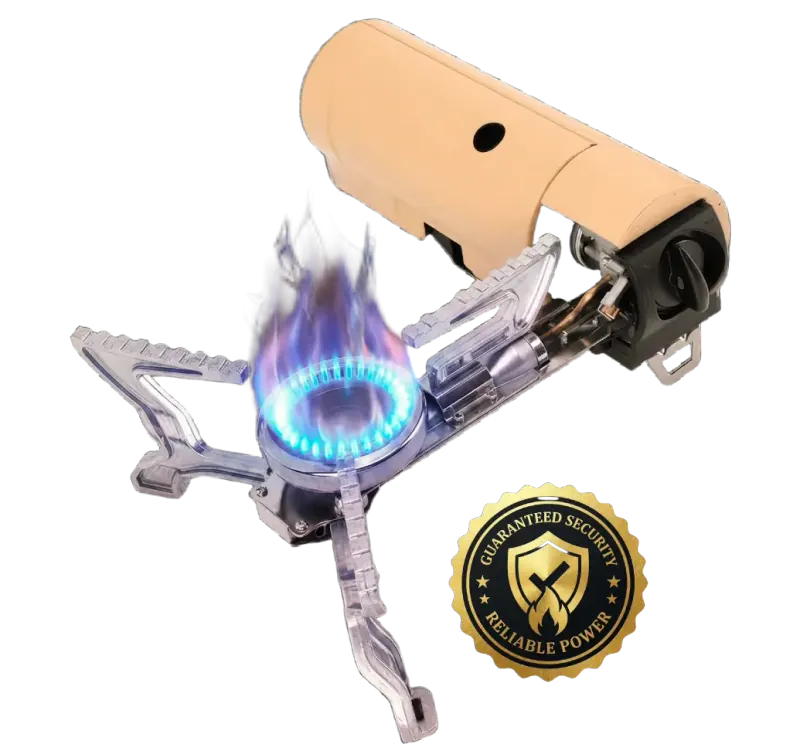
Once you accept that a gas stove belongs outside, the question becomes: which stove makes cooking outside effortless? The Qinux GoFlamex is the one we recommend, for camping trips and for the next time the lights go out. It folds into its own case, sets up on a porch or driveway in seconds, lights with one press and delivers real kitchen-level heat, so a blackout dinner is not a compromise. It is the most practical way to keep hot meals coming while staying on the right side of the safety line.
- Up to 2600W — boils water and heats a skillet fast, so you spend minutes outside, not an hour.
- Precise flame control — a steady blue flame from simmer to full power.
- Electronic ignition — one press to light, even in the cold or dark.
- Reinforced base — stable on a table, tray or paving slab.
- Smart valves and auto-lock — built-in protection against unexpected overpressure, according to the maker.
- Folds into its own case — stores in a closet or car trunk and goes from box to flame in seconds.
Owners rate it 4.8/5 on the official site from more than 1,300 reviews, and 94% would recommend it. Right now it costs $119 for one stove (half the regular $238), dropping to $86 per unit on the 5-pack, with free shipping and a 14-day money-back guarantee. It is sold only on the official website.
Want the full picture first? Read our complete GoFlamex review or see the quick overview on our home page. As with any gas stove, follow the manual and use the fuel it specifies, use it outdoors only and keep kids and pets away from the flame.
Frequently asked questions
Can I use a camping gas stove indoors during a power outage?
Not unless the stove is specifically rated by its maker for indoor use, and most portable camping stoves are not. Burning gas produces carbon monoxide, which you cannot see or smell. During an outage, carry the stove outside to a porch, balcony, patio or driveway, cook there, and bring the hot food in.
Is a butane stove safer indoors than a propane one?
Both burn gas and both produce carbon monoxide, especially when the flame is low, the pot sits very close to the burner or the room has little fresh air. The fuel type does not change the rule: follow the label on your stove, and if it says outdoor use, use it outdoors.
Can I use a portable gas stove in the garage with the door open?
A garage with the door open is still an enclosed space with poor air exchange, and manuals group garages with tents and campers as places not to use the stove. Set it up outside the garage on the driveway instead; it takes the same thirty seconds.
What are the signs of carbon monoxide exposure?
Headache, dizziness, nausea, weakness and confusion, often described as feeling like the flu but without a fever. If several people feel ill at the same time in a room where gas is burning, get everyone outside into fresh air immediately and call for help.
Can I use the stove in a tent or an RV?
No. Tents, campers, vans and cars are the most dangerous places of all, because they are small and seal in exhaust fumes. Cook under the open sky, a few steps from the tent, and never bring a lit or still-hot stove inside.
Is it OK to use a portable stove under a covered porch?
A porch or balcony that is open to the outside air on at least one full side is generally fine, and it is where most people cook during an outage. Keep the stove on a flat, stable, non-flammable surface, away from railings, awnings and anything that can catch fire. In apartment buildings, check first: fire codes and leases often ban open-flame cooking on balconies (see can you use a camping stove on a balcony?).