The quick answer
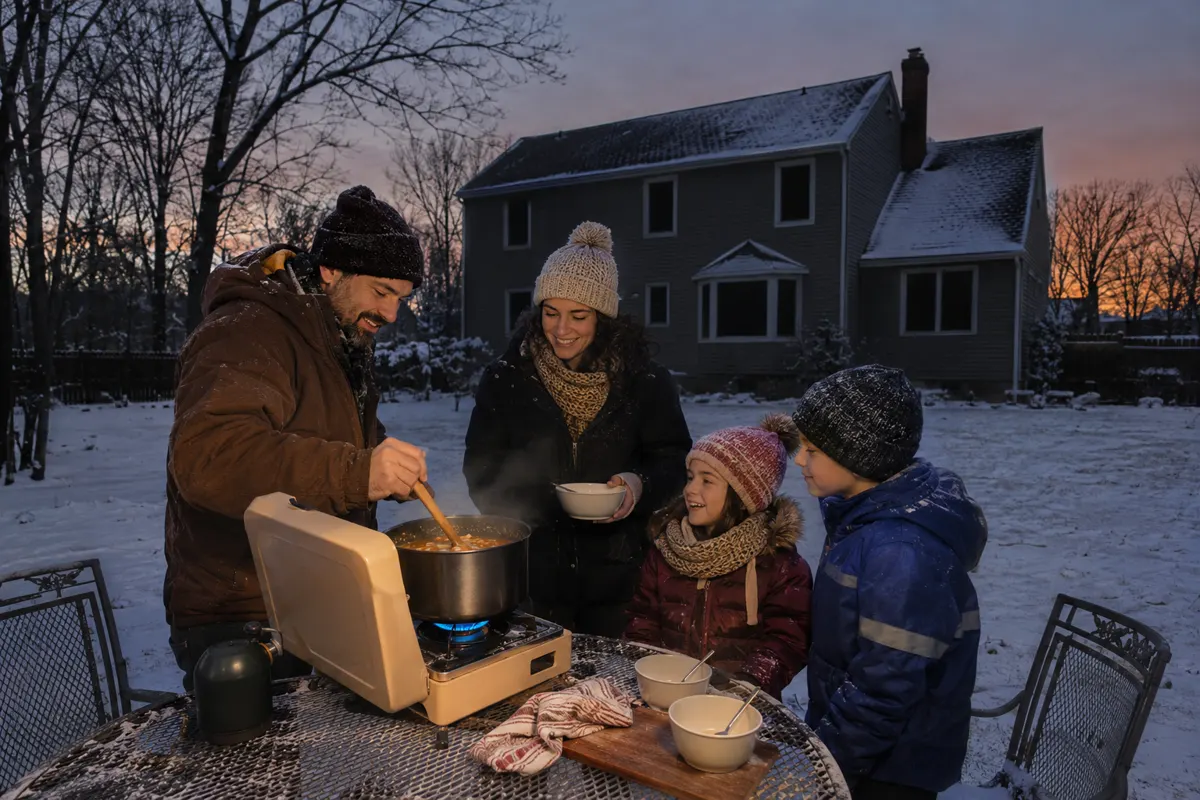
To cook during a power outage, use a stove that runs without electricity, such as a portable gas stove, and use it outdoors only, on a stable table at least 20 feet from doors, windows and the garage. Keep spare fuel of the type the manual specifies, a carbon monoxide alarm inside, and a few days of quick-cook food. Take the 7-question quiz below to see whether your home is ready; if you score low on backup cooking, a folding stove like the Qinux GoFlamex is the simplest fix.
Winter storms, ice on the lines and overloaded grids knock out power somewhere in the country every season. The first hours are easy: flashlights, blankets, a cold sandwich. By the second evening, everyone wants something hot, the fridge is a countdown clock and the electric range is useless. Households that handle outages calmly are not the ones with the most gear. They are the ones that answered a few questions before the lights went out. Here they are.
The 7-question power outage cooking quiz
Give yourself 2 points for “yes”, 1 point for “sort of” and 0 points for “no”. Be honest; nobody is grading you except the next storm.
- Can you cook a hot meal without electricity?A portable gas stove, camp stove or grill that you have used at least once. An electric kettle or induction plate does not count.
- Do you have spare fuel of the right type, stored safely?The fuel your stove’s manual specifies, enough for a few days, stored as the label says, away from heat and out of living spaces.
- Do you have a safe outdoor cooking spot picked out?A patio, driveway or yard with a stable table, at least 20 feet from doors, windows, vents and the garage, with some shelter from the wind.
- Do you have working carbon monoxide alarms inside?Battery-powered or with battery backup, tested recently, near sleeping areas.
- Do you have three days of food that needs little or no cooking?Canned soup, beans, pasta, oats, peanut butter, shelf-stable milk, plus drinking water.
- Do you know the fridge and freezer rules?Keep the doors closed; about 4 hours for the fridge, 48 hours for a full freezer, 24 for a half-full one. A fridge thermometer helps.
- Is your outage cooking kit in one place?Lighter or matches, a pot with a lid, a manual can opener, a headlamp, oven mitt, trash bags and a bucket of water or extinguisher nearby.
Your score
| Score | Result | What it means | Do this next |
|---|---|---|---|
| 11–14 | Ready for winter | You can cook safely through a multi-day outage | Test the stove once a season and rotate food |
| 6–10 | Worth adjusting | Some pieces are missing, usually cooking or fuel | Fix the lowest-scoring questions this month |
| 0–5 | Start now | A long outage would mean cold food and risky shortcuts | Get a backup stove and a CO alarm first |
Score 11–14: ready for winter
Nice work. Your job now is maintenance: light the stove once at the start of winter so you know it works, check that your fuel is still in good condition, replace CO alarm batteries, and eat and replace your outage food every few months so nothing expires in the back of the pantry. Our portable gas stove maintenance guide covers the seasonal check.
Score 6–10: worth adjusting
This is where most homes land. You probably have food and flashlights, but the cooking part is weak: an old stove that may not light, a single fuel canister, or no clear plan for where to cook. Look at the questions where you scored 0 or 1 and fix those first. If question 1 or 2 is the problem, a reliable folding gas stove with electronic ignition is the most useful single upgrade, because it turns your food supply into hot meals. Pick your outdoor spot now, while it is light and dry, not during a storm.
Score 0–5: start now
No judgment: most people never think about this until the first long outage. Start with two things this week: a carbon monoxide alarm and a way to cook outdoors. Then add three days of easy food and a box for your kit. That alone moves you into the middle band. The most dangerous outage mistakes, such as bringing a grill or camp stove inside to stay warm or cook, happen when people have no plan. Read can you use a portable gas stove indoors? to understand why outdoor-only is the rule.
How to cook during a power outage, step by step
- Eat the fridge firstCook perishables from the fridge in the first hours, keep the freezer closed and save canned food for later.
- Set up outsideStable table, sheltered from wind, at least 20 feet from doors, windows and vents, with nothing flammable overhead.
- Keep meals one-potSoup, chili, pasta, oatmeal, scrambled eggs: one pot saves fuel and dishes. Our easy camping meals work just as well on the patio.
- Use a lidWater boils faster and you use less fuel (more tweaks in how to boil water faster while camping).
- Never leave the flame unattendedTurn it off, let it cool, then bring the stove inside only when it is cold and the fuel is disconnected as the manual says.
- Check food temperaturesIf fridge food has been above 40°F for too long, throw it out. Do not taste to test.
Our recommendation: Qinux GoFlamex
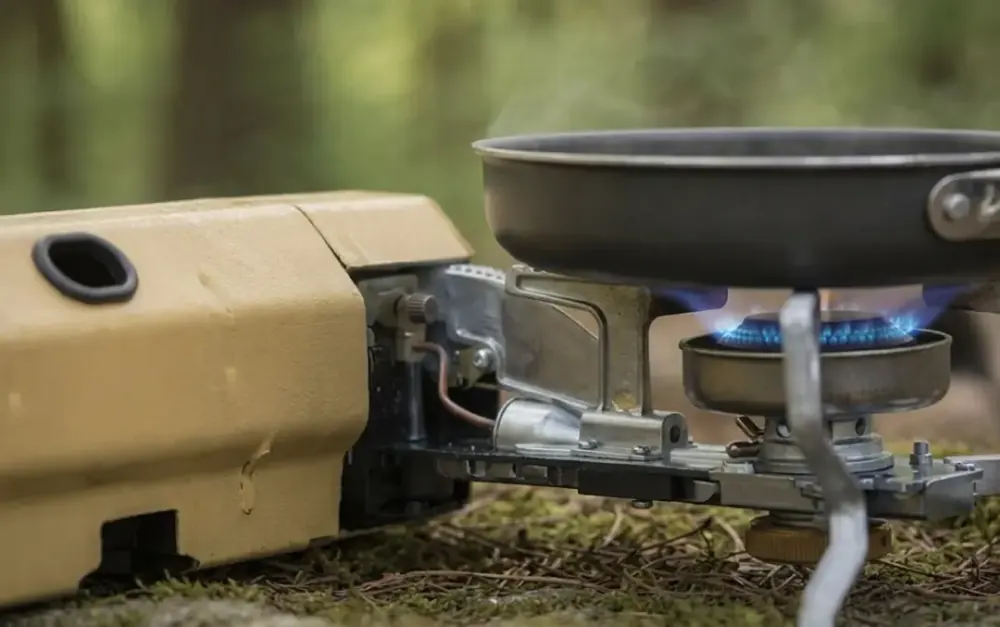
If the quiz showed a gap in questions 1 or 7, the Qinux GoFlamex is the stove we recommend for a home backup kit. It folds into its own case, lives on a closet shelf all year and is ready the moment the power goes out: carry it to the patio, open it, press the ignition and you have a strong blue flame for soup, coffee and boiled water. It is the same stove you would take camping, which means it gets used and tested, not forgotten.
- Up to 2600W with precise flame control — a fast boil for water and pasta, a low simmer for soup and oatmeal.
- Electronic ignition — one press to light, even with cold hands.
- Reinforced base — stable under a big pot on a patio table.
- Smart valves and auto-lock — built-in protection against unexpected overpressure, according to the maker.
- Folds into its own case with a carry bag — easy to store with your outage kit.
Owners rate it 4.8/5 on the official site from more than 1,300 reviews, and 94% would recommend it. Right now it costs $119 for one stove (half the regular $238), with free shipping and a 14-day money-back guarantee. It is sold only through the official website.
Want the full picture first? Read our complete GoFlamex review or see the overview on the GoFlamex home page. As with any gas stove, follow the manual, use the fuel it specifies and cook outdoors only, never in the house, garage or a tent.
Frequently asked questions
How can you cook when the power goes out?
Use a cooking appliance that does not need electricity, such as a portable gas stove, a camp stove or a grill, and use it outdoors only, on a stable surface and well away from doors, windows and vents. If you have a gas range indoors, follow the manufacturer’s guidance for lighting it during an outage. Keep no-cook foods on hand for times when cooking is not practical.
Can I use a camping stove indoors during a power outage?
No. Camp stoves, portable gas stoves, grills and generators produce carbon monoxide, an invisible gas that can build up indoors and in garages. Ready.gov advises using camp stoves, generators and charcoal grills outdoors and at least 20 feet from windows, doors and garages.
How long does food stay safe in the fridge without power?
According to U.S. food safety guidance, an unopened refrigerator keeps food safe for about 4 hours. A full freezer holds its temperature for about 48 hours and a half-full freezer for about 24 hours if the door stays closed. When in doubt, check temperatures and throw it out.
What food should I keep for a power outage?
Keep several days of foods that need little or no cooking: canned soups, beans and tuna, peanut butter, crackers, oatmeal packets, shelf-stable milk, dried fruit and bottled water. A pot of soup or pasta is easy on a portable stove outdoors, and a manual can opener is essential.
What is the safest way to boil water without electricity?
Boil it on a portable gas stove or grill outdoors, in a pot with a lid to save fuel. Bring water to a rolling boil, and follow your local authority’s instructions if there is a boil-water notice.