The quick answer
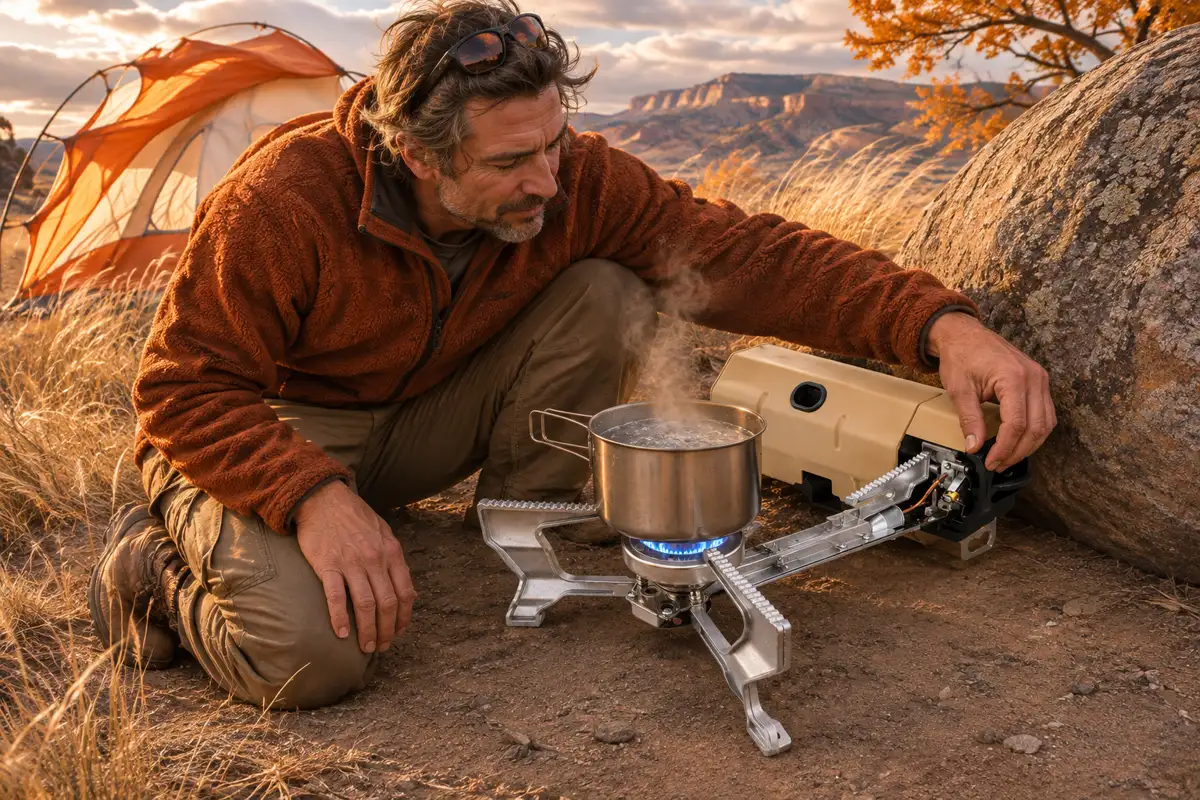
To use a camp stove in the wind, put a natural windbreak between the wind and the stove, keep open air around the fuel, and cook with a lid on a steady medium-high flame. A boulder, your car or a cooler on the windward side does most of the work. A windscreen can cut boil times dramatically, but one that wraps around a gas canister can overheat it, so follow your stove’s manual. Never retreat into a tent or vehicle to escape the wind.
Wind is the reason a pot that boils in five minutes in the backyard takes fifteen at the trailhead, and the reason a breakfast skillet stays lukewarm on one side. Fall and winter trips make it worse: more wind, colder air and shorter days. The good news is that most of the problem is technique, not equipment. Where you put the stove, how you shelter it and how you manage the pot and flame matter more than raw power. Here is the method, step by step.
Why wind steals so much heat
A gas flame heats the bottom of the pot, and the hot gases then flow up and around its sides. Wind breaks that pattern in two ways: it pushes the flame sideways, so part of it misses the pot, and it carries heat away from the pot walls before it reaches the food. America’s Test Kitchen showed how big the effect is: in its tests, one stove needed about 7 minutes to boil water in the wind without protection and just 2 minutes 15 seconds with a windscreen and reflector. Same stove, same water; the only difference was the wind.
Technique at a glance
| Step | How to do it | Why it matters |
|---|---|---|
| 1. Read the wind | Check which way grass, tent fabric or smoke moves before you unpack | Tells you which side needs shelter |
| 2. Pick the spot | Flat, stable ground on the calm side of a boulder, tree base or low bank | Natural shelter costs nothing and cannot trap heat |
| 3. Add a windbreak | Car (engine off), cooler or gear bin on the windward side | Blocks gusts while air still flows around the stove |
| 4. Keep the fuel side open | Nothing wrapped around the canister or fuel compartment | Prevents dangerous heat build-up on the gas |
| 5. Center the pot, lid on | Right-size pot, centered on the supports, lid always on | Keeps the flame under the pot and the heat inside it |
| 6. Steady flame | Medium-high rather than full blast; turn down to simmer once boiling | Less flame blowing past the pot, less wasted fuel |
| 7. Stay close | Watch the flame; if it blows out, shut off the gas before relighting | Unburned gas and gusts are the main wind hazards |
Step 1–2: read the wind and pick the spot
Before you unpack, spend ten seconds watching the grass, a tent wall or campfire smoke to see where the wind comes from. Then look for natural shelter on the downwind side of something solid: a boulder, the base of a large tree, a low bank or a dip in the ground. America’s Test Kitchen gives the same advice for backpacking stoves: open areas are more exposed, so cook behind a boulder or tree or at the base of a cliff. The ground should be flat and firm, because a gust is far more likely to tip a stove that already rocks. Keep the spot clear of dry grass, leaves and anything that can blow into the flame.
Step 3: build a windbreak, not an oven
At a car campsite or a tailgate you have better windbreaks than any backpacker: park the car with its side to the wind (engine off), or line up a cooler and a gear bin on the windward side of the table. The goal is to block gusts at a short distance, not to box the stove in. Air must still reach the burner for clean combustion, and heat must still be able to escape from around the fuel. If you are heading out for a cold-weather trip, our guide to a camp stove that will not light or has a weak flame covers the cold side of the same problem.
Step 4: windscreens and the fuel canister
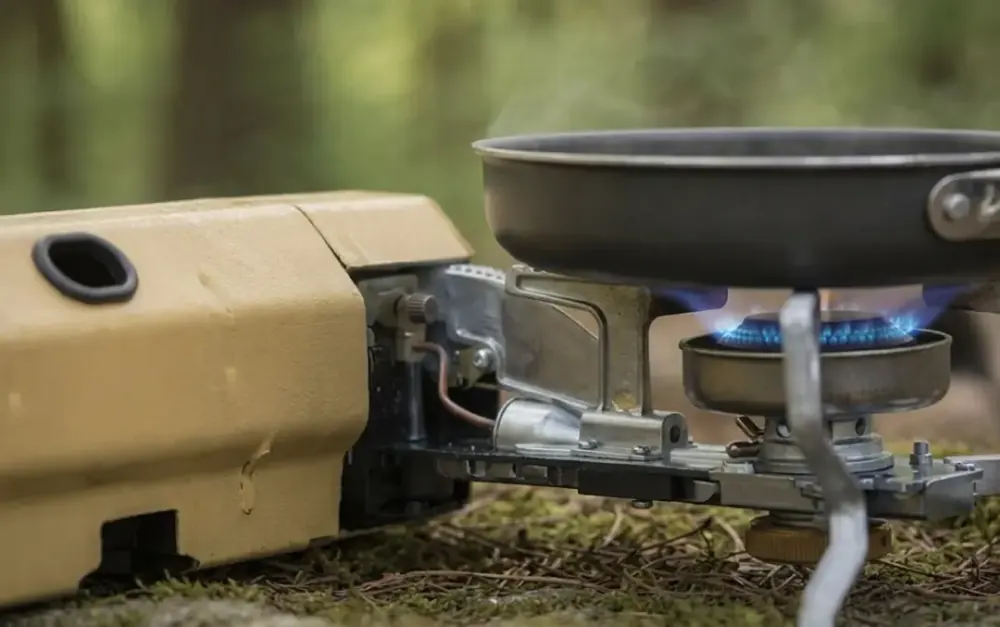
This is where technique becomes safety. A windscreen that wraps closely around a stove can reflect heat back onto the gas canister or fuel compartment, and an overheated canister builds pressure. Manufacturers disagree on windscreens because stoves are built differently: MSR recommends a windscreen for its WindPro, a stove whose canister sits away from the burner on a hose, but its WindBurner manual says never to use any kind of windscreen. The rule that follows is simple: use only the wind protection your stove’s manual allows, never wrap foil around a canister or fuel compartment, and touch-check the fuel side now and then. If it feels more than warm, turn the stove off and open up the shelter. For the full set of rules, see our portable gas stove safety tips.
Step 5–6: pot, lid and flame technique
- Lid on, always. A lid keeps the heat in the pot instead of letting the wind cool the surface of the water.
- Center the pot. An off-center pot leaves one side of the flame uncovered, and that side is the one the wind blows away.
- Right-size the pot. A pot that matches the supports catches the flame best. Many stove manuals also warn against oversized pans that overhang toward the fuel side, because they reflect heat back onto it.
- Medium-high beats full blast. In wind, a roaring flame mostly blows past the pot. A steady, slightly lower flame stays tucked under the base.
- Cook in bursts. Boil water first while you have the best shelter, then simmer with the lid on. One-pot meals cook more evenly in wind than a wide, uncovered skillet. Our 8 tweaks to boil water faster while camping go deeper on fuel savings.
Step 7: what to do when a gust blows the flame out
Turn the gas off immediately. Wait a few seconds for unburned gas to clear, improve the shelter, then relight. Never keep clicking the igniter while gas is flowing into a blown-out burner. And no matter how strong the wind gets, do not move the stove into a tent, vestibule, vehicle or garage: gas stoves give off carbon monoxide and need open air.
Common mistakes on windy days
- Cooking in the open on the picnic table because it is convenient; ten feet of shelter makes a huge difference.
- Building a tight foil enclosure around the whole stove and its fuel.
- Turning the flame to maximum and burning through fuel without a faster boil.
- Leaving the lid off to watch the water.
- Walking away from a lit stove in gusty conditions.
Our recommendation: Qinux GoFlamex
Good wind technique works best with a stove that is quick to light, steady on the ground and easy to control, and that is exactly how we would describe the Qinux GoFlamex. Its push-button electronic ignition lights without matches or a lighter in the wind, its blue flame reaches up to 2600W and turns down precisely to a steady simmer, and its reinforced base holds a pot steady on uneven campsite ground. It folds into its own case, so it goes wherever the best shelter is: behind the boulder, beside the car or on the tailgate.
- One-press electronic ignition — quick, safe relighting after you improve the shelter.
- Up to 2600W with precise flame control — strong enough for a cold, breezy boil, gentle enough to simmer.
- Reinforced base — less wobble when gusts hit.
- Smart valves and auto-lock — protection against unexpected overpressure, according to the maker.
- Folds into its own case with a carry bag — set up in seconds wherever the wind is calmest.
Owners rate it 4.8/5 on the official site from more than 1,300 reviews, and 94% would recommend it. Right now it costs $119 for one stove (half the regular $238), $210 for two, with free shipping and a 14-day money-back guarantee. It is sold only through the official website. Read our full GoFlamex review or compare the packages on the home page.
Always follow the stove manual, including its guidance on wind protection, and use portable gas stoves outdoors only.
Frequently asked questions
How do you use a camp stove in the wind?
Set the stove on flat, stable ground on the sheltered side of a natural windbreak such as a boulder, your vehicle or a cooler, keep the pot centered with a lid on, and run a steady medium-high flame instead of full blast. Keep open air around the fuel canister or fuel compartment.
Does a windscreen really help a camp stove?
Yes. In America’s Test Kitchen testing, one stove boiled water in 2 minutes 15 seconds with a windscreen and reflector versus 7 minutes without them in wind. The catch is that a windscreen that wraps around a fuel canister can trap heat, so always follow your stove’s manual.
Can a windscreen make a gas canister overheat?
It can if it encloses the canister or the fuel compartment. Some manufacturers recommend windscreens for stoves with a remote canister, while others, such as MSR for its WindBurner system, say never to use any windscreen. Keep the fuel side open to the air and touch-check it now and then.
Why does wind make my camp stove so slow?
Wind blows the flame sideways and strips heat away from the bottom and sides of the pot before it can warm the food, so more of the fuel heats the air instead. It can also blow out a low flame entirely.
Can I cook in my tent or vestibule to get out of the wind?
No. Gas stoves produce carbon monoxide and an open flame, so never use one inside a tent, vestibule, vehicle or other enclosed space. Find a windbreak outside instead.
What should I do if the flame keeps blowing out?
Turn off the gas right away, wait a moment for any unburned gas to clear, then move to a more sheltered spot before relighting. Electronic ignition makes relighting quick, but the fix is better shelter, not more relighting.