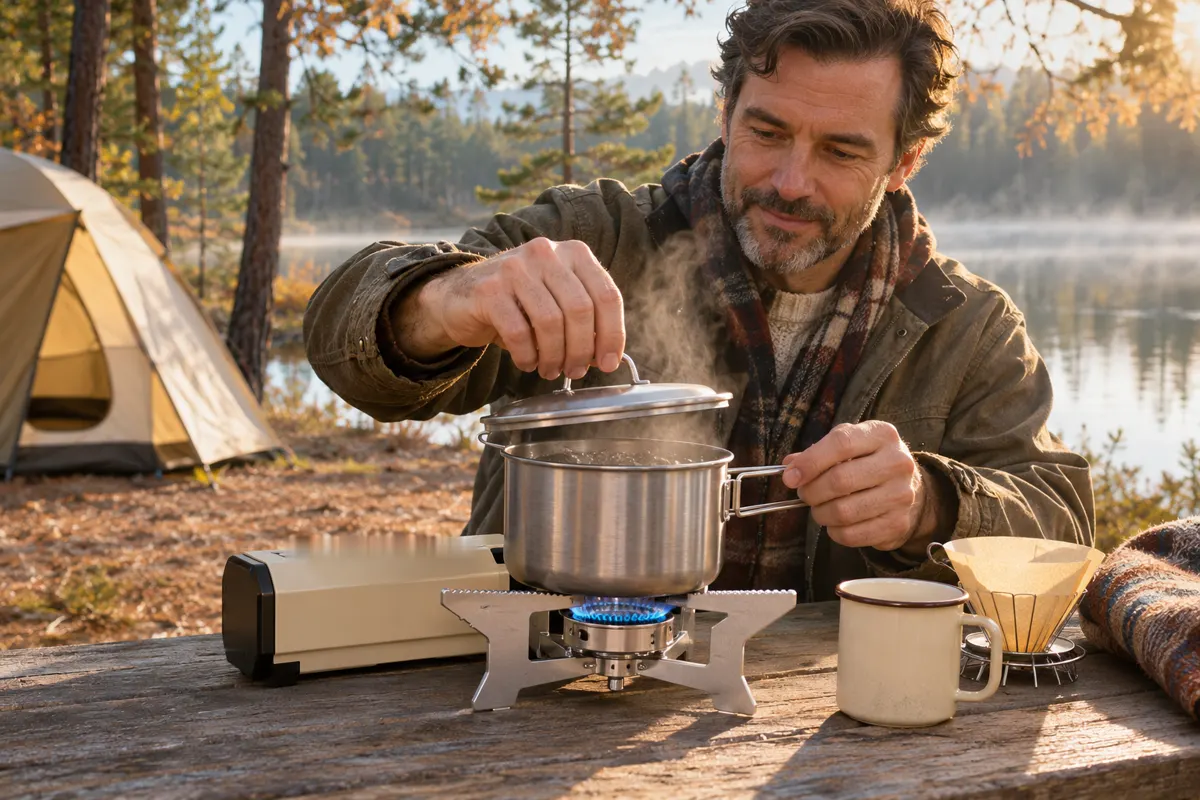
The quick answer
To boil water faster while camping, put a lid on, block the wind and match the flame to the pot. Those three tweaks do most of the work. After that, heat only the water you need, start with water that is not ice-cold, keep the stove on a stable surface out of the breeze and, in cold weather, keep the fuel from getting chilled. A stove with strong output and fine flame control, such as the Qinux GoFlamex, makes every one of these adjustments easier.
Every camper knows the moment: everyone is waiting for coffee, the pot is on the flame, and the water just will not boil. Most of the time the stove is not the problem. Boiling water is a contest between the heat your burner puts into the pot and the heat the pot loses to the air, the wind and the cold ground. Small changes on either side of that contest add up quickly. Here are eight adjustments that separate a slow, fuel-hungry boil from a quick one, each with the reason it matters.
1. Put a lid on the pot
Why it matters: an open pot loses a large share of its heat from the surface, as steam and warm air rising away. A lid traps that heat and sends it back into the water. It is the cheapest, easiest speed-up there is, and it also saves fuel. If your pot has no lid, a flat piece of foil pressed over the top is better than nothing.
2. Block the wind, without boxing in the stove
Why it matters: even a light breeze pulls the flame sideways and carries heat away before it reaches the pot. Wind is the number-one reason a boil drags on at the campsite. Set up behind a natural windbreak: the side of the car, a rock, a cooler or the picnic table with gear stacked on the windward side.
Keep air flowing around the stove itself and never wrap anything tightly around the fuel supply. Follow your stove’s manual on what kind of wind protection it allows, and always cook outdoors. Our portable gas stove safety tips cover the safe setup.
3. Match the pot to the burner
Why it matters: a tiny pot on a big flame wastes the heat that curls around its sides. A huge pot with a narrow base takes forever to warm all that metal and water. The sweet spot is a pot whose base is a little wider than the flame ring, with a flat bottom that sits steady on the supports. Thin metal pots warm up quickly; a heavy cast-iron pot is wonderful for stews but slow for a quick boil.
4. Use a strong flame that stays under the pot
Why it matters: turning the knob to maximum is not always fastest. Once the flame spreads past the edge of the pot, the extra heat goes into the air, not the water. Open the flame until it covers the base, and stop when the tips start licking up the sides. A stove with precise flame control lets you hit that point exactly. If your flame looks yellow, weak or uneven, see why a camp stove flame is weak.
5. Heat only the water you need
Why it matters: every extra cup is extra time and fuel. Two people making coffee need roughly two mugs, not a full pot. Measure with your mug before you light the stove; you can always boil a second round. For coffee methods that use less water, see how to make coffee while camping.
6. Start with warmer water
Why it matters: water straight from a cold creek or a cooler full of ice has further to go. Keep tomorrow’s morning water in a bottle inside the car or tent overnight rather than outside, and in sunny weather leave a water container in the sun for an hour before cooking. Every degree you start with is a degree the stove does not have to supply.
7. Keep the stove and fuel out of the cold
Why it matters: gas stoves tend to lose strength when the fuel and the stove are very cold, a common surprise on frosty fall mornings. Store the fuel in the car or another sheltered spot overnight (never inside a closed tent near people and never near heat), set the stove on a table rather than frozen ground, and follow the manual’s guidance for cold-weather use.
8. Keep the pot clean and the lid ready
Why it matters: a bottom caked with soot or burnt food conducts heat less well, and a pot that rocks on the supports loses contact with the flame. Wipe the base after each trip, check that the pot sits flat, and put the lid on before lighting so you never boil uncovered “just for a minute.”
The 8 tweaks at a glance
| Tweak | Why it speeds up the boil | Effort |
|---|---|---|
| Lid on | Keeps surface heat in the pot | None |
| Windbreak | Stops heat blowing away from the pot | Low |
| Right-size pot | Flame heats the base, not the air | Low |
| Flame under the pot | No heat wasted up the sides | None |
| Only the water you need | Less water to heat | None |
| Warmer starting water | Fewer degrees to climb | Low |
| Fuel and stove kept warm | Full output on cold mornings | Low |
| Clean, flat pot | Better heat transfer and contact | Low |
A note on altitude and safe drinking water
At higher elevations, water boils at a lower temperature. That means it can come to a boil a little sooner, but the water is not as hot, which is why pasta and rice take longer to cook in the mountains. If you are boiling water to make it safe to drink, the CDC advises bringing it to a rolling boil for 1 minute, or 3 minutes above 6,500 feet, then letting it cool. Plan your fuel with that in mind on high-country trips.
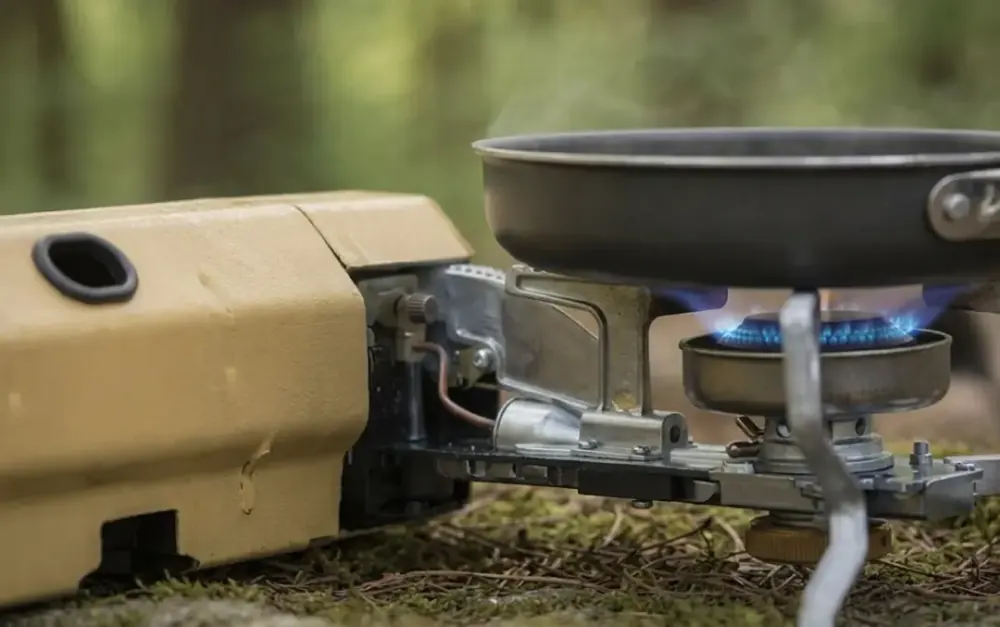
Our recommendation: Qinux GoFlamex
All eight tweaks work better on a stove built for them, and that is why the Qinux GoFlamex is the camp stove we recommend. Its strong blue flame delivers up to 2600W for a quick boil, its precise flame control lets you set the flame to the exact width of your pot, and its reinforced base keeps a full pot level and steady. It folds into its own case, so it comes on every trip, and lights with one press, even on a cold morning.
- Up to 2600W with precise flame control — a fast boil for coffee and pasta, a gentle simmer for oatmeal.
- Electronic ignition — one press to light, no matches in the wind.
- Reinforced base — stable under a full pot on a picnic table.
- Smart valves and auto-lock — built-in protection against unexpected overpressure, according to the maker.
- Folds into its own case with a carry bag — quick to set up and pack away.
Owners rate it 4.8/5 on the official site from more than 1,300 reviews, and 94% would recommend it. Right now it costs $119 for one stove (half the regular $238), with free shipping and a 14-day money-back guarantee. It is sold only through the official website.
Want the full picture first? Read our complete GoFlamex review or see the overview on the GoFlamex home page. As with any gas stove, follow the manual, use the fuel it specifies and cook outdoors only, never in a tent, car or garage.
Frequently asked questions
What is the fastest way to boil water while camping?
Use a camp stove rather than a campfire, put a lid on the pot, shelter the stove from the wind, use a pot whose base matches the burner, and only heat the water you need. Starting with water that is not ice-cold also helps. Together these small tweaks cut boil time noticeably.
Does a lid really make water boil faster?
Yes. Without a lid, a lot of heat escapes from the surface of the water as steam and warm air. A lid keeps that heat in the pot, so the water reaches a boil sooner and the stove burns less fuel.
Why does my camp stove take so long to boil water?
The most common reasons are wind blowing the heat away from the pot, no lid, a pot that is too small or too large for the burner, very cold water and, in cold weather, a fuel supply that is not performing at full strength. Check those before assuming the stove is weak.
Does water boil faster at high altitude?
Water boils at a lower temperature at altitude, so it can reach a boil sooner, but that water is not as hot, which is why food takes longer to cook up high. For making water safe to drink, the CDC advises a rolling boil for 1 minute, or 3 minutes above 6,500 feet.
Should I turn the stove to full blast to boil water faster?
Not always. If the flame is wider than the bottom of the pot, the extra heat curls up the sides and into the air. A strong flame that stays under the base of the pot is usually the most efficient setting. Adjust with the flame control until the flame no longer licks up the sides.