The quick answer
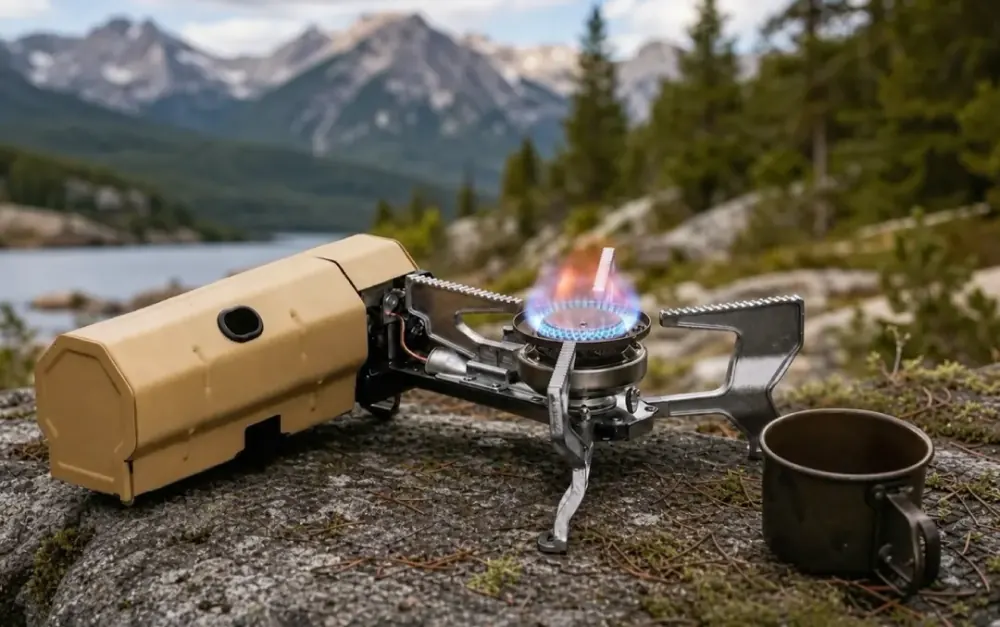
To cook on a road trip, keep a small trunk kitchen in one box (stove, fuel, one pan, one pot, utensils), shop for 1–2 days at a time, and plan one hot meal a day at a campground or park picnic area where stoves are allowed. Stick to one-pan meals, cook outdoors only and clean up while the pan is warm. A compact folding stove like the Qinux GoFlamex makes it fast: it lives in the trunk, lights with one push and packs away in seconds.
Road trips are about freedom, until the third gas-station sandwich in a row. Eating out for every meal gets expensive fast, the healthy options disappear somewhere between two interstates, and the best views are usually nowhere near a restaurant. Cooking your own hot meals solves all three problems, and it is much easier than most people think. You do not need a camper van or a full camp kitchen. You need a small, well-organized box and a simple routine.
Why road trip meals go wrong
- No plan — you get hungry at the worst moment, far from a grocery store, and end up at the drive-through.
- Gear scattered all over the car — if the stove is under the luggage, you will never bother to use it.
- Too ambitious — multi-pot recipes on a picnic table at sunset rarely end well.
- Food that spoils — a warm cooler and a hot trunk ruin perishables quickly.
Step 1: build a trunk kitchen in one box
Everything you need to cook goes into one plastic tote that sits on top of the luggage, so you can grab it in seconds:
- Portable stove + fuel — a compact folding stove and the fuel recommended in its manual, plus a spare.
- One skillet and one pot with lids — lids save fuel and keep dust and bugs out.
- Utensils — spatula, wooden spoon, tongs, a sharp knife with a cover, a small cutting board.
- Eating kit — reusable plates, bowls, cups and cutlery for each person.
- Cleanup — biodegradable soap, a sponge, a small towel, paper towels and trash bags.
- Basics — oil, salt, pepper, a spice mix, coffee and a water jug.
Step 2: a simple daily cooking routine
- Morning: fast and hotCoffee and oatmeal or eggs before you leave the campground. Ten minutes, one pot. (Our guide on how to make coffee while camping has six easy methods.)
- Midday: no-cook lunchWraps, sandwiches, fruit and snacks at a scenic stop. Save the stove for when you have time.
- Afternoon: shop for tonightBuy only what you need for the next one or two meals. Less food in the cooler means less waste.
- Evening: one hot mealStop at a campground or a picnic area where stoves are allowed, set up on a flat table, cook one pan and eat with the view.
- Clean up warmWipe the pan while it is still warm, wash up, pack the box and top up ice for tomorrow.
Easy one-pan road trip meals
| Meal | What you need | Why it works |
|---|---|---|
| Breakfast burritos | Eggs, tortillas, cheese, salsa | One pan, eat by hand |
| Loaded ramen | Ramen, frozen veggies, an egg | One pot, very cheap |
| Sausage and peppers | Pre-cooked sausage, peppers, onion | Fast, few dishes |
| Quesadillas | Tortillas, cheese, beans, leftovers | Uses up odds and ends |
| Pasta with jarred sauce | Short pasta, sauce, parmesan | Filling after a long drive |
| Chili bowls | Canned chili, rice cups, cheese | Just heat and eat |
Want more ideas? Our list of easy camping meals for a portable stove works just as well on the road. Cooking at work instead of on vacation? See how to make a hot lunch at work with a portable stove.
Where to cook (and where not to)
The best road trip kitchens are campgrounds and park picnic areas that allow stoves: flat tables, trash cans and usually water nearby. Some rest areas and parks do not allow open flames, and many regions restrict them in fire season, so read the posted rules before you light up. Wherever you stop, follow the same basics: cook outdoors only, never in the car or a tent, set the stove on a flat, solid surface away from the vehicle and dry grass, and keep kids and pets back from the flame. Our portable gas stove safety guide covers the rest.
The stove makes or breaks it
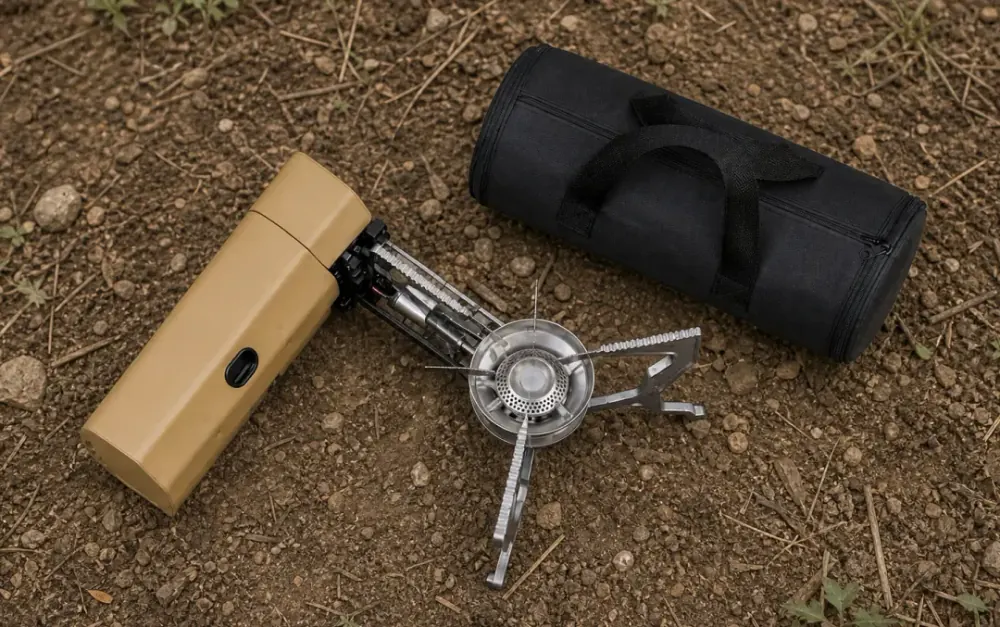
On the road, a stove has to earn its place in the trunk. Big two-burner boxes take up luggage space and need a lot of setup, so they end up staying in the car. A compact folding stove like the Qinux GoFlamex is the opposite: it closes inside its own case, sits on top of the gear and is cooking in under a minute, which is exactly what turns “we should cook tonight” into an actual hot dinner.
Our recommendation: Qinux GoFlamex
For road trippers who want real hot meals without hauling a bulky camp kitchen, the Qinux GoFlamex is the stove we recommend. It is built for exactly this kind of quick, anywhere cooking:
- Folds into its own case — with a carry bag included, it takes very little trunk space and is always ready to grab.
- Push-button electronic ignition — no matches, no fiddling; light it and start cooking in seconds.
- Up to 2600W with a steady blue flame — boils water and heats a skillet fast after a long day of driving.
- Precise flame control — from a rolling boil to a gentle simmer for eggs, sauces and reheating.
- Reinforced base — stays steady on uneven picnic tables.
- Smart valves against overpressure and an auto-lock — built-in safety features for extra peace of mind.
Owners rate it 4.8/5 on the official site from more than 1,300 reviews, and 94% would recommend it. Right now it costs $119 for one stove (half the regular $238), and the price drops to $86 per unit on the 5-pack. Shipping is free, and every order is covered by a 14-day money-back guarantee. It is sold only on the official website.
Want the full picture first? Read our complete GoFlamex review or see the quick overview on our home page. As with any gas stove, follow the manual, use it outdoors only and keep kids and pets away from the flame.
Frequently asked questions
Where can you cook on a road trip?
Campgrounds, picnic areas in state and national parks that allow stoves, and dispersed camping areas where fires and stoves are permitted are the usual spots. Rules differ from place to place, and some areas restrict open flames during fire season, so check signs and local regulations before you light up. Always cook outdoors, never inside the car.
Can I cook at a rest stop?
It depends on the state and the specific rest area. Many have picnic tables, but some do not allow open flames or stoves. Look for posted rules, and when in doubt, choose a park picnic area or campground instead.
What food is easiest to cook on a road trip?
One-pan and one-pot meals that use few ingredients: scrambled eggs and tortillas, instant oatmeal, pasta with jarred sauce, quesadillas, sausages with peppers, ramen with added vegetables, and canned chili or soup. Prepping some ingredients at home saves a lot of time.
How do you keep food cold on a road trip?
Use a good cooler, pre-chill it, pack it full, keep it in the shade and out of the hot trunk where possible, and top up ice daily. Keep raw meat sealed at the bottom and plan to cook perishables early in the trip.
Is it cheaper to cook on a road trip than eat out?
Usually, yes. Buying groceries along the way and cooking even one or two meals a day costs much less than eating every meal at restaurants, and you get to stop wherever the view is best.
Can I use a portable stove inside my car or van?
No. Portable gas stoves are made for outdoor use. Burning gas inside a car, van, tent or any enclosed space can build up carbon monoxide. Set up outside on a stable surface, away from the vehicle and anything flammable.