The quick answer
The best camp stove recipes are often the everyday one-pan meals that home cooks around the world have made for generations: North African and Middle Eastern shakshuka, Korean kimchi fried rice, Mexican chilaquiles, Spanish-style paella, Indian-style chickpea curry, Italian aglio e olio and Japanese rice bowls. They use pantry ingredients, one burner and one pan. All you need is a stove that holds a steady flame, like the folding Qinux GoFlamex.
After a few trips, hot dogs and foil packets get old. The good news: kitchens around the world already solved the “one burner, one pan, not much time” problem. Many of the world’s most loved home dishes were never meant for big kitchens. They were made in small homes, on a single flame, with whatever was in the pantry. That makes them perfect camp stove recipes. Here are eight we love, each simplified for a campsite table.
Before you go: the global camp pantry
- Pack a spice kit. Small labeled bags of cumin, paprika, chili flakes, curry powder and garlic powder cover almost every recipe below.
- Pre-cook rice at home. Day-old rice is what fried rice is supposed to be made with, and it saves fuel at camp.
- Chop at home. Onions, peppers and garlic in zip bags turn every recipe into a 20-minute meal.
- Bring a wide skillet and one pot. A cast-iron or heavy skillet does six of the eight recipes. Our camping kitchen setup checklist has the full gear list.
1. Shakshuka (North Africa and the Middle East)
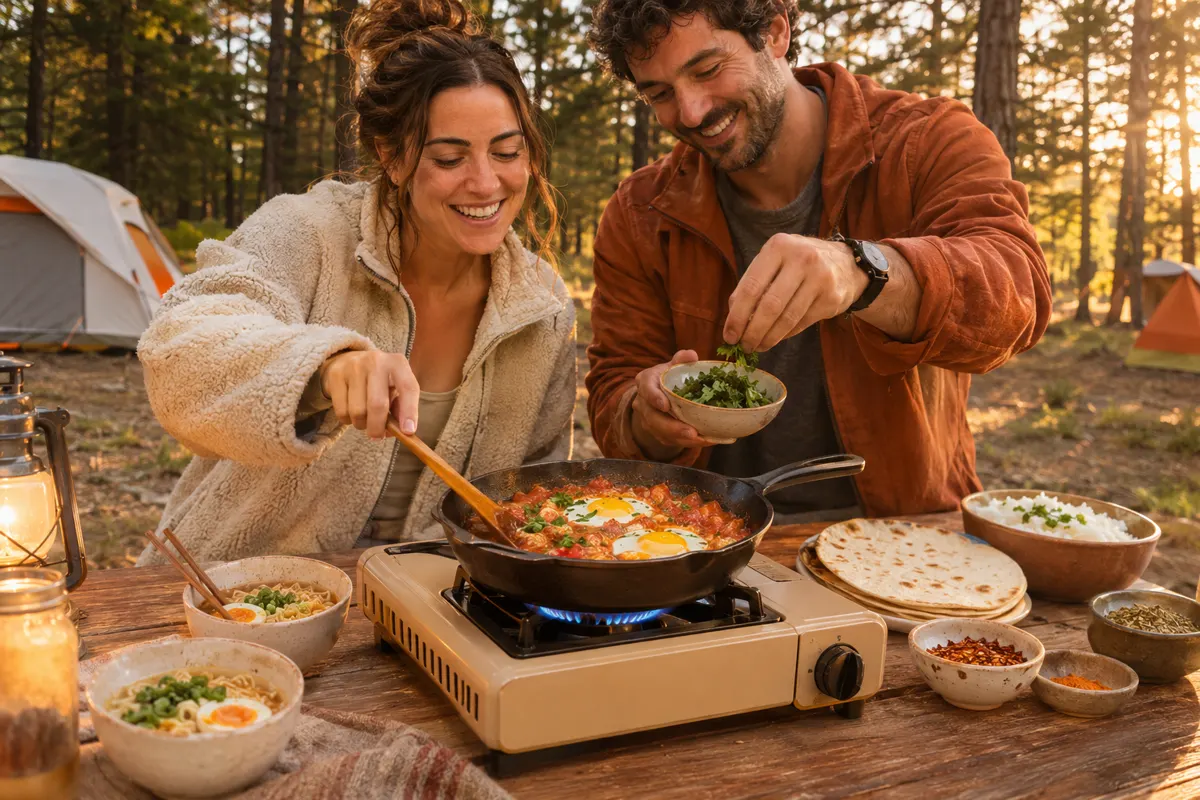
Eggs gently poached in a spiced tomato and pepper sauce, eaten straight from the pan with bread. Sauté onion and pepper, add a can of crushed tomatoes with cumin and paprika, simmer 10 minutes, make small wells and crack in the eggs. Cover and cook on low until the whites set. It is the best camp breakfast we know, and it is all about a gentle simmer.
2. Kimchi fried rice (Korea)
A classic Korean way to use leftover rice. Fry chopped kimchi in a little oil for a few minutes, add cold cooked rice, a splash of kimchi juice and soy sauce, and toss on high heat until it crisps. Top with a fried egg. Kimchi travels well in a sealed jar in the cooler.
3. Chilaquiles (Mexico)
Crisp tortilla chips simmered briefly in red or green salsa, topped with cheese, onion and a fried egg. At camp, warm a jar of salsa in the skillet, stir in a few handfuls of sturdy tortilla chips for a minute or two so they soften slightly, then top. It is a great way to use the bag of chips everyone packed.
4. One-pan paella-style rice (Spain)
True paella is a whole tradition, but its one-pan idea suits camp cooking perfectly. Brown chorizo or chicken pieces, add onion, garlic, paprika and a pinch of saffron or turmeric, stir in short-grain rice, then pour in hot stock and do not stir again. Keep the flame steady and medium-low until the rice is tender. Precise flame control is what makes or breaks this one.
5. Chickpea curry (India-inspired)
Inspired by Indian chana masala. Sauté onion, garlic and ginger, add curry powder or paste, a can of tomatoes and a can of drained chickpeas, and simmer 15 minutes. Serve with naan warmed in a dry pan or with pre-cooked rice. It is filling, vegetarian and needs no cooler space.
6. Pasta aglio e olio (Italy)
Italy’s famous late-night pasta: spaghetti, garlic, olive oil and chili flakes. Boil pasta in one pot, drain most of the water (save a cup), then in the same pot gently fry sliced garlic and chili in olive oil on low, toss the pasta back in with a splash of pasta water and parsley. Five ingredients, one pot, ten minutes.
7. Upgraded ramen (Japan)
Instant noodles are a camping staple, but Japanese ramen shops show how far a bowl can go. Cook the noodles, then add a soft-boiled egg, scallions, a handful of spinach, leftover chicken or corn, a little sesame oil and a dash of chili oil. Make the eggs first in the same pot while the water comes to a boil.
8. Japanese-style rice bowl (oyakodon-inspired)
Oyakodon means “parent and child bowl”: chicken and egg simmered in a sweet-savory broth over rice. Simmer thin chicken strips and sliced onion in a mix of soy sauce, a little sugar and water until cooked through, pour beaten eggs over, cover for a minute and slide it over rice. Make sure the chicken is fully cooked before adding the eggs.
The 8 recipes at a glance
| Recipe | Inspired by | Best for | Flame | Time |
|---|---|---|---|---|
| Shakshuka | North Africa / Middle East | Breakfast | Low simmer | 25 min |
| Kimchi fried rice | Korea | Lunch | High | 15 min |
| Chilaquiles | Mexico | Brunch | Medium | 15 min |
| Paella-style rice | Spain | Group dinner | Steady medium-low | 35 min |
| Chickpea curry | India | Dinner, vegetarian | Medium then low | 25 min |
| Aglio e olio | Italy | Late dinner | High boil, then low | 15 min |
| Upgraded ramen | Japan | Cold evenings | High boil | 12 min |
| Oyakodon-style bowl | Japan | Dinner | Medium simmer | 20 min |
Times are approximate and depend on altitude, wind and your pan. Looking for more classic American campsite food? Our 15 easy camping meals for a portable stove covers breakfasts, lunches and dinners.
What these recipes have in common
Look at the list again and a pattern shows up: almost every dish moves between a strong heat and a gentle one. Fried rice and ramen want a hard boil or high flame; shakshuka, paella and aglio e olio burn or break if the flame cannot go low. That is the real secret of global one-pan cooking, and the reason a stove with fine flame control matters more than raw power alone. If yours struggles in the cold or wind, check our guide to fixing a weak camp stove flame.
Our recommendation: Qinux GoFlamex
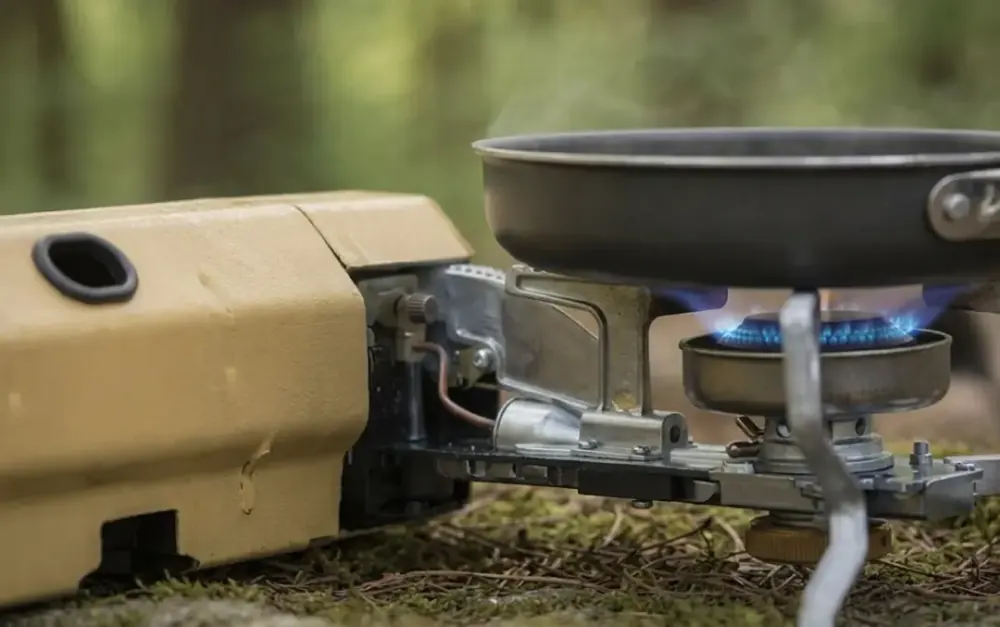
For cooking like this, the Qinux GoFlamex is the stove we recommend. Global one-pan recipes need two things from a burner: enough power to bring water to a fast boil and get rice crispy, and a flame you can turn down low enough to poach eggs in shakshuka or keep paella from scorching. The GoFlamex gives you both, folds into its own case and lights with one press.
- Up to 2600W with precise flame control — a rolling boil for ramen and pasta, a gentle simmer for eggs and rice.
- Electronic ignition — one press to light, no matches needed.
- Reinforced base — stable under a heavy cast-iron skillet on a camp table.
- Smart valves and auto-lock — built-in protection against unexpected overpressure, according to the maker.
- Folds into its own case with a carry bag — easy to pack next to your spice kit.
Owners rate it 4.8/5 on the official site from more than 1,300 reviews, and 94% would recommend it. Right now it costs $119 for one stove (half the regular $238), with free shipping and a 14-day money-back guarantee. It is sold only through the official website.
Want the full picture first? Read our complete GoFlamex review or see the overview on the GoFlamex home page. As with any gas stove, follow the manual, use the fuel it specifies, respect your site rules and cook outdoors only.
Frequently asked questions
What are the easiest camp stove recipes?
One-pan dishes that started as everyday home cooking: shakshuka, fried rice, pasta aglio e olio, chilaquiles and simple curries. They need one burner, a skillet or pot, a few pantry ingredients and very little cleanup.
Can you make paella on a camping stove?
You can make a simplified one-pan version. Use a wide skillet, keep the flame steady and medium-low once the rice is in, and do not stir after the stock goes in. A stove with precise flame control makes the even, gentle heat much easier.
What international foods travel well for camping?
Dried pasta, rice, ramen noodles, tortillas, canned chickpeas and tomatoes, eggs, spice blends, curry paste and kimchi in a sealed jar all travel well. Pre-chop vegetables and pre-mix spices at home to keep camp prep short.
How do I keep food safe when cooking at camp?
Keep perishables in a well-iced cooler below 40°F, store raw meat sealed at the bottom, cook eggs and meat thoroughly, and keep a separate cutting board for raw meat. Cook outdoors only, on a stable surface.
Do I need a two-burner stove for these recipes?
No. Every recipe here is designed for a single burner. When a dish has two parts, cook them in stages: boil the water or cook the rice first, then make the sauce in the same pan.