The quick answer
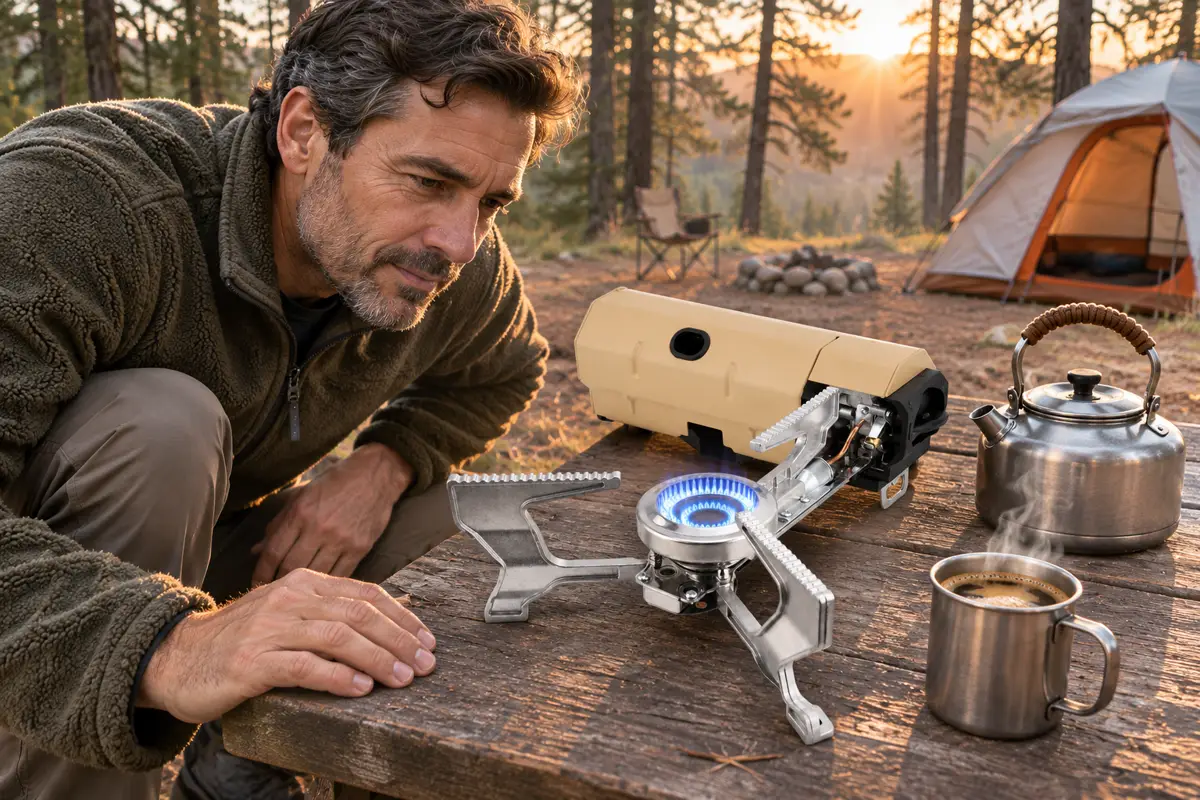
Most camp cooking problems are prevented by tiny habits, not big skills. Tie eight five-minute actions to moments you already have on every trip: a stove check the night before, choosing a sheltered spot when you arrive, a quick look before you light, prepping coffee the night before, a lid on every pot, a wipe-down after dinner, a safe shut-down before bed and a restock when you get home. Do them for one or two trips and they run on autopilot.
Ask experienced campers what makes a trip go smoothly and they rarely talk about recipes. They talk about the little things: the stove that lit first time because they checked it at home, the coffee that was ready in minutes because the water was already measured, the dinner that did not blow out in the wind because they picked the right spot. None of these take long. The trick is to attach each one to a moment that already happens on every trip, so you never have to remember it.
Why five-minute habits beat a long checklist
Long checklists get skipped, especially when you arrive at camp tired and hungry. A habit tied to a trigger (“when I pack the car…”, “when the coffee is done…”) is easier to keep because the moment reminds you. Here is how the eight habits fit across a typical trip:
| When | Habit | Time |
|---|---|---|
| Night before you leave | Stove and fuel check | 5 min |
| When you arrive | Pick the cooking spot | 3 min |
| Before you light | Quick look and clear area | 2 min |
| After dinner | Prep tomorrow’s coffee | 3 min |
| Every time you cook | Prep first, lid on | 5 min |
| After cooking | Cool, wipe, dry | 5 min |
| Before bed | Safe shut-down and pack | 3 min |
| When you get home | Restock and note | 5 min |
The 8 habits, one by one
- The night before you leave: a five-minute stove checkUnfold the stove, look at the pot supports and base, press the ignition and listen for the click, then fold it back into its case. Pack the fuel the manual specifies plus a spare, and drop a backup lighter or matches into the bag. Most “it won’t light” moments at camp start with skipping this step; if it happens anyway, see why a camp stove won’t light.
- When you arrive: pick the cooking spot before you unpackOutdoors, flat, stable, non-flammable, sheltered from strong wind and well away from tents, awnings and dry grass. Choosing it first means you will not end up cooking wherever the cooler happened to land.
- Before you light: a two-minute lookCheck that the stove sits level, the fuel is connected exactly as the manual shows, nothing flammable is within reach and kids and pets know the stove zone. Then light it.
- After dinner: prep tomorrow’s coffeeMeasure the water into the kettle and the coffee into a jar, and set the mugs out. In the cold morning you just light the stove and wait for the boil. Our guide to making coffee while camping has six easy methods.
- Every time you cook: prep first, lid onOpen packets, chop and pre-mix before you light the burner, then cook with a lid whenever you can. Shorter cooking time saves fuel and keeps the flame steadier in a breeze.
- After cooking: cool, wipe, dryLet the stove cool completely, then wipe the pot supports and the area around the burner. Spilled grease is easier to remove the same evening than after a dusty drive home. At the end of the season, add our portable gas stove maintenance routine before winter storage.
- Before bed: a safe shut-downMake sure the flame is off and the valve closed, disconnect and store the fuel the way its label and the manual describe, and fold the stove into its case. Fuel never goes inside the tent.
- When you get home: restock and make a noteAir the case, check the stove one last time, replace any fuel you used and jot down one line: what you cooked and what you wished you had brought. The next trip starts better.
Habits that keep everyone safe
Three of the eight habits (the cooking spot, the two-minute look and the shut-down) are really safety habits in disguise. Portable gas stoves are made for outdoor use, and the basics never change: cook outside, keep a clear zone, never leave a lit stove unattended and follow the manual for the fuel. Our portable gas stove safety tips cover the rest in detail.
How the right stove makes the habits easier
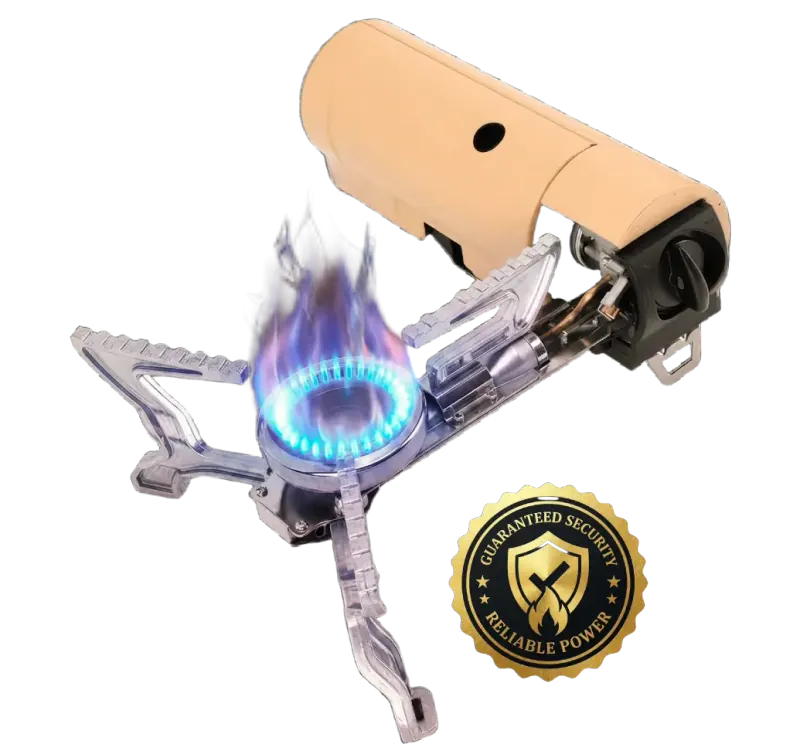
Habits stick when the gear cooperates. A stove that lights with one press, folds into its own case and sits steady on a picnic table turns most of these habits into seconds instead of minutes. That is the idea behind the Qinux GoFlamex: electronic ignition for the night-before check, a reinforced base for stable setup, precise flame control so a lid and a low flame do the cooking, and a fold-away design so the bedtime pack-up is one motion.
Our recommendation: Qinux GoFlamex
If you want camp cooking to feel easy from the first coffee to the last pack-up, the Qinux GoFlamex is the stove we recommend. It is built around exactly the moments in this guide: quick to check, quick to light, steady while you cook and quick to put away.
- Up to 2600W — real kitchen-level heat for boiling, searing and one-pan meals.
- Electronic ignition — one press to light, no matches needed.
- Precise flame control — a steady blue flame from simmer to full power.
- Reinforced base — stable with real pots and pans.
- Smart valves and auto-lock — built-in protection against unexpected overpressure, according to the maker.
- Folds into its own case with a carry bag — the bedtime pack-up takes seconds.
Owners rate it 4.8/5 on the official site from more than 1,300 reviews, and 94% would recommend it. Right now it costs $119 for one stove (half the regular $238), dropping to $105 each on the 2-pack and $86 per unit on the 5-pack, with free shipping and a 14-day money-back guarantee. It is sold only on the official website.
Want the full picture first? Read our complete GoFlamex review, see the overview on the GoFlamex home page or start with camp stove for beginners. As with any gas stove, follow the manual, use the fuel it specifies and cook outdoors only.
Frequently asked questions
What should I check on a camp stove before every trip?
That it folds and unfolds smoothly, that the pot supports and base are intact, that the ignition clicks, that you have the fuel type the manual specifies plus a spare, and that a backup lighter or matches are packed. The whole check takes about five minutes at home.
Where should I set up a camp stove at the campsite?
Outdoors only, on a flat, stable, non-flammable surface, sheltered from strong wind and well away from tents, awnings, dry grass and anything that can catch fire. Never cook inside a tent or a closed vehicle.
How do I save fuel when cooking on a camp stove?
Use a lid, prep ingredients before you light the stove, shelter the flame from the wind with the surroundings rather than blocking airflow, and match the flame to the pan size. These habits shorten cooking time, which is what saves fuel.
How do I clean a camp stove after cooking?
Let it cool completely, then wipe the pot supports and the area around the burner with a dry or slightly damp cloth to remove spills and grease. Keep water away from the ignition and valve parts, and let everything dry before you fold it into its case.
How should I store a camp stove between trips?
Clean and dry, folded into its case, in a cool, dry place. Store fuel the way its label and your stove manual describe, away from heat sources, and check the stove again before the next trip.