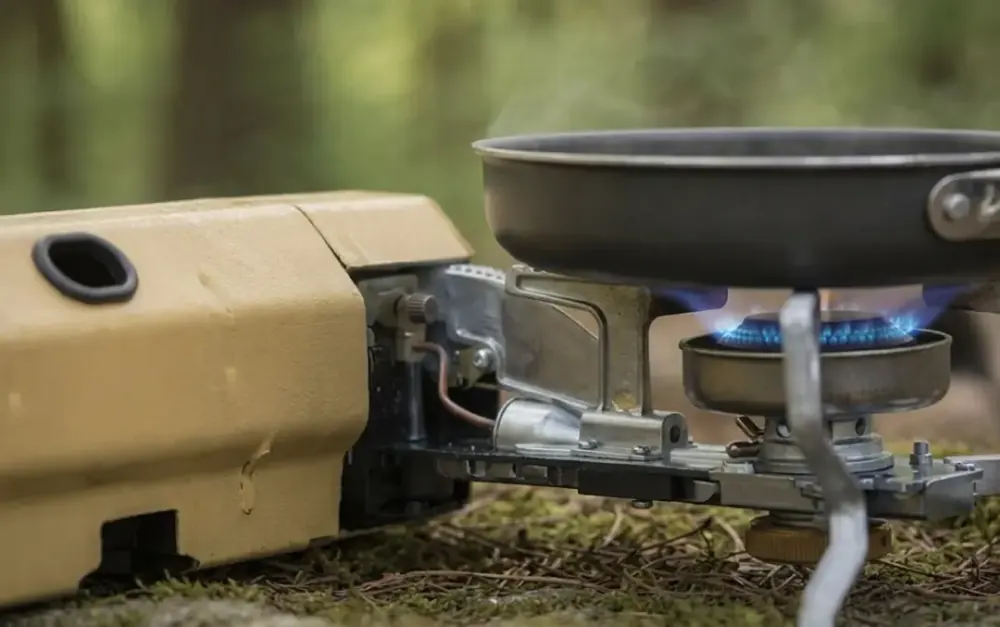
The quick answer
To cook fish while camping, keep it on ice, clean it the same day, coat the fillets in seasoned flour or cornmeal and pan-fry them over medium heat for a few minutes per side, until the flesh is opaque and flakes easily (the USDA lists 145°F for fish). A steady, adjustable flame matters more than anything else here, which is why a portable stove like the Qinux GoFlamex is the easiest way to turn your catch into a real shore lunch.
There is a reason “shore lunch” is a tradition among anglers: fish never tastes better than when it went from the water to the pan in a couple of hours. But the first time you try it, a lot can go wrong. The fish sits in the sun, the fire is too hot on one side and dead on the other, the coating burns and the middle stays raw. Here is how a day at the lake goes when it goes right, hour by hour, and where each step matters.
5:45 am: coffee before the first cast
It is cold and still, and the lake is steaming. Before you even rig a line, you unfold the stove on the tailgate or picnic table, press the ignition and put water on. A few minutes later you have hot coffee in hand. That first small task is also a quick test run: the stove is level, the flame is steady, and you know exactly where everything is in your kit for later. (If you are still choosing a brewing method, our guide to making coffee while camping compares six of them.)
8:30 am: the catch, and the step most people skip
You land a couple of keepers. This is the moment that decides how lunch will taste. Fish start to lose quality quickly when they warm up, so:
- Get them cold fast — on ice in a cooler, not in a bucket of lake water in the sun.
- Keep the cooler in the shade and drain melted water so the fish sit on ice, not in a warm puddle.
- Know the rules — fishing licenses, size limits and bag limits are set by each state and sometimes by the lake. Check them before you keep anything.
11:00 am: clean and prep
Back at camp, clean the fish at a cleaning station if the site has one, or well away from your cooking area. Rinse the fillets with clean water, pat them dry with paper towels and put them back on ice while you set up. Dry fillets brown; wet fillets steam and the coating slides off.
Your shore lunch kit is short:
| Item | Why you need it |
|---|---|
| Skillet (cast iron or heavy nonstick) | Even heat, crisp coating |
| Oil or butter | A thin layer to fry in |
| Flour, cornmeal or a fish breading, plus salt and pepper | The simple coating that makes a shore lunch |
| A zip bag | To shake the fillets in the coating without a mess |
| Tongs or a thin spatula | To flip delicate fish without breaking it |
| Lemon and a food thermometer (optional) | Flavor, and a sure way to check doneness |
12:00 pm: the shore lunch, step by step
- Set the stove on a stable, level surfaceA picnic table or flat rock, outdoors, away from dry grass, tents and branches. Shield it from strong wind with your vehicle or a cooler.
- Coat the filletsPut the flour or cornmeal and seasoning in a zip bag, add the fillets and shake. Tap off the excess.
- Heat the pan firstMedium heat, a thin layer of oil or butter. It is ready when the oil shimmers or the butter foams.
- Lay the fish in, away from youDo not crowd the pan; cook in batches if needed. Crowding drops the temperature and the coating goes soggy.
- Leave it aloneLet it cook about 3 to 5 minutes for thin fillets, until the edges turn golden and it releases from the pan.
- Flip onceTurn it gently and cook the other side. Thicker pieces and whole small fish need longer; lower the flame slightly so the outside does not burn before the middle is cooked.
- Check donenessThe flesh should be opaque and flake easily with a fork. The USDA safe minimum for fish is 145°F if you carry a thermometer.
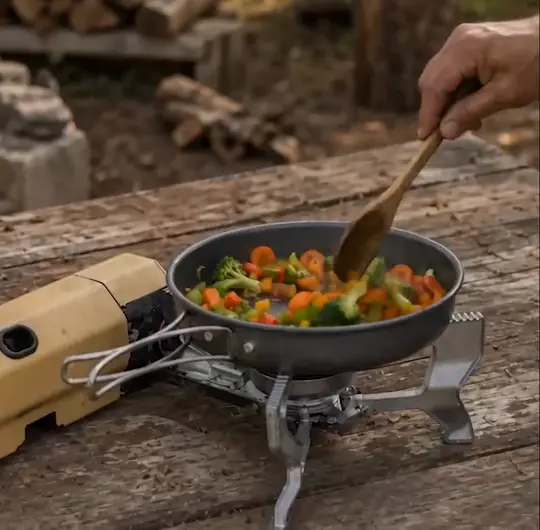
Why the flame makes or breaks fish
Fish is delicate. It cooks fast, it sticks when the pan is not hot enough, and it burns when it is too hot. Over a campfire, heat is uneven: one side of the grate scorches, the other barely sizzles, and every gust changes things. That is the most common shore lunch failure, and it is the main reason so many anglers cook on a stove instead. With a portable stove like the GoFlamex you set the flame once, adjust it with a knob when the thicker pieces go in, and get the same golden result batch after batch. It also works on days when fire restrictions mean no campfire at all, which we cover in camp stove vs. campfire cooking.
Easy sides on the same burner
- Pan potatoes — pre-boiled at home, sliced and crisped in the pan before the fish.
- Corn or green beans — a few minutes in the pan with butter.
- Rice or couscous — boil water first, cover and let it sit while you fry the fish.
- Lemon wedges and hot sauce — no cooking needed.
1:00 pm: cleanup and back on the water
Turn the stove off and let it cool before packing it. Wipe the skillet while it is warm, let used oil cool and pack it out in a sealed container rather than pouring it on the ground, and bag fish scraps according to the site rules so they do not attract animals. Fold the stove into its case and you are back on the water within half an hour.
Common shore lunch mistakes
- Fish left warm all morning — the biggest flavor killer. Ice it right away.
- Wet fillets — pat dry, or the coating will not stick.
- A cold pan — fish sticks and tears. Wait for the shimmer.
- Too much heat — burnt outside, raw inside. Medium is your friend.
- Flipping too early or too often — once is enough.
More fixes for the most common outdoor kitchen problems are in our list of camp cooking mistakes to avoid.
Our recommendation: Qinux GoFlamex
If you fish, camp or picnic by the water, the Qinux GoFlamex is the portable stove we recommend for a proper shore lunch. It is built for exactly what fish needs: strong heat to get the pan ready fast and precise control to keep it at a steady medium while the fillets turn golden. It is the most practical way to go from catch to plate at the lake.
- Up to 2600W — heats a skillet or boils water for coffee and sides in minutes.
- Precise flame control — from a gentle simmer to a high flame, so delicate fish cooks evenly.
- Electronic ignition — lights with one press, even with cold or wet hands.
- Reinforced supports — a stable base for a heavy cast iron skillet.
- Smart valves and auto-lock — built-in protection against unexpected overpressure, according to the maker.
- Folds into its own case — with a carry bag that fits in the boat, truck or tackle pile.
Owners rate it 4.8/5 on the official site from more than 1,300 reviews, and 94% would recommend it. Right now it costs $119 for one stove (half the regular $238), dropping to $86 per unit on the 5-pack, with free shipping and a 14-day money-back guarantee. It is sold only on the official website.
Want the full picture first? Read our complete GoFlamex review or see the quick overview on our home page. As with any gas stove, follow the manual and use the fuel it specifies, use it outdoors only and keep kids and pets away from the flame.
Frequently asked questions
What is the easiest way to cook fish while camping?
Pan-frying in a skillet on a camp stove is the simplest and most reliable method. Dredge the fillets in seasoned flour or cornmeal, heat a little oil or butter over medium heat, and cook a few minutes per side until the flesh is opaque and flakes easily with a fork.
How long do you cook fish fillets on a camp stove?
Thin fillets usually need about 3 to 5 minutes per side over medium heat. Thicker pieces and whole small fish take longer. Go by doneness rather than the clock: the flesh should be opaque all the way through and flake easily. The USDA lists 145°F as the safe internal temperature for fish.
How do I keep fish fresh until I cook it?
Keep it cold. Put the fish on ice in a cooler as soon as possible after you decide to keep it, and keep it out of the sun. Clean it the same day, and cook or keep it chilled until mealtime.
Can I cook fish on a camp stove instead of a campfire?
Yes, and many people prefer it. A stove gives you steady, adjustable heat, which matters for delicate fish that can burn on the outside and stay raw inside over uneven coals. It also works when campfires are banned.
Do I need a license to fish and cook my catch?
Fishing rules are set by each state and sometimes by the specific lake or park. Most places require a fishing license and have limits on species, size and number. Check the local wildlife agency rules before your trip.
Where is it safe to use a portable gas stove at the lake?
Outdoors only, on a stable, level surface such as a picnic table or flat rock, away from dry grass, tents and overhanging branches. Never use it inside a tent, car or closed shelter.